




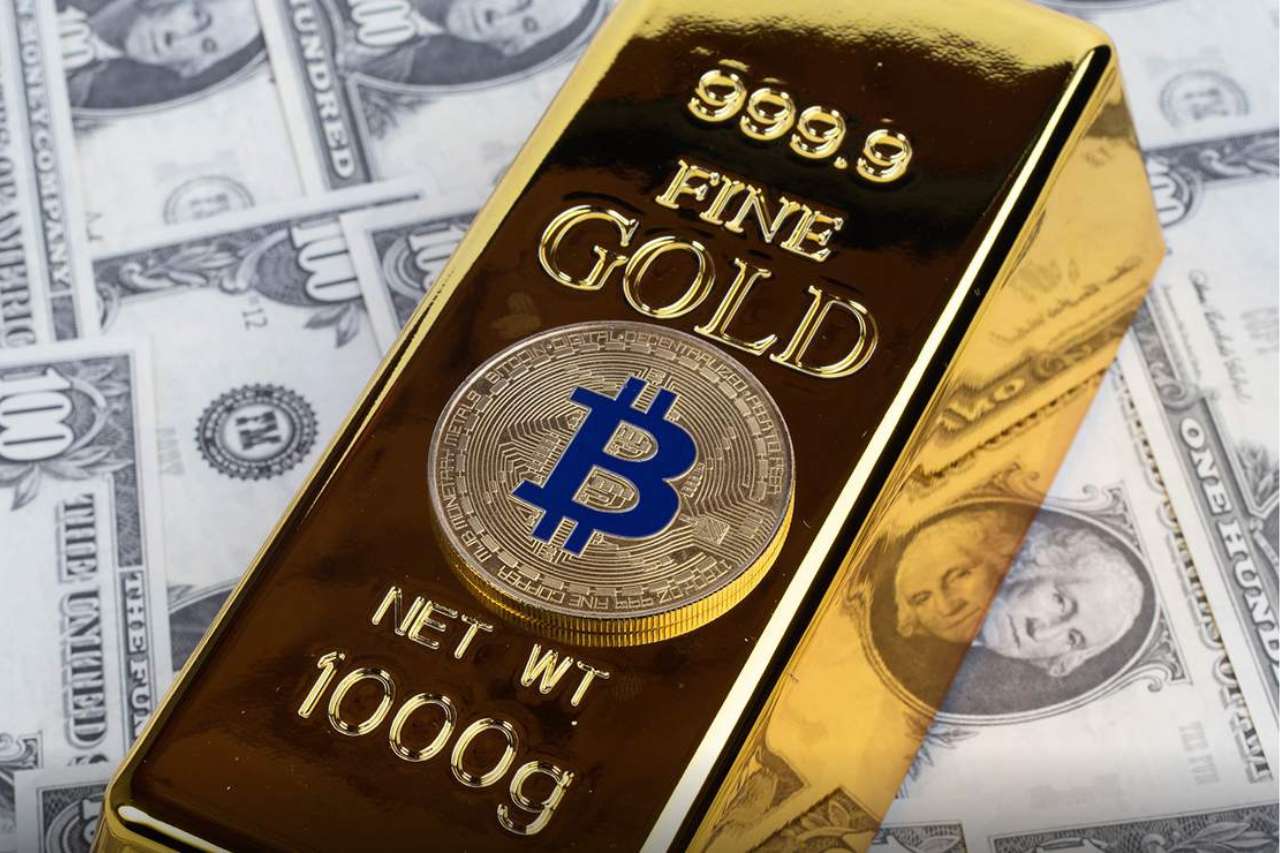
It’s not a coincidence that the price of gold has achieved a historical high during a period of significant risk for USD. This has triggered a new wave of tension in Asia, vividly recalling how the abrupt shift in the global reserve currency can negatively impact the economy.
Bitcoin, having doubled in value this year and currently at $43,000, is also unlikely to alleviate the pressure on exchanges from Tokyo to Mumbai.
Evidently, USD is on a downward trajectory as the Federal Reserve (Fed) is thought to have completed its interest rate hike process to control inflation. However, the genuine concern lies in a trio of apprehensions transitioning to the forefront, indicating a challenging 2024 in Asia.
Firstly, the repercussions of Fed’s most forceful tightening policy since the mid-1990s have materialized. Secondly, anxieties about U.S. economic powerhouse disrupting financial paths. And thirdly, political polarization in Washington is jeopardizing the world’s largest economy’s AAA credit rating.
From a certain perspective, USD reaching its pinnacle brings a sense of relief.
Alexandra Dimitrijevic, the head of global research at S&P Global, highlights that USD’s strength “is exerting additional pressure on many” emerging markets “with $46 billion in denominated debt coming due next year, excluding China”.
Periods when the USD strengthens often work against economies in Asia that heavily rely on exports. The significant rise in the value of USD observed in recent years has attracted imbalanced capital inflows, depriving Asia of crucial investment.
Fed’s “taper tantrum” in 2013 serves as a reminder of this phenomenon. However, Asia’s real concern dates back to the 1994-1995 period, the last instance when Fed aggressively reduced interest rates after raising short-term rates within a 12-month timeframe. By 1997, the extended USD recovery and elevated U.S. bond yields made it unsustainable to maintain fixed exchange rates.
The first was Thailand’s chaotic devaluation of the baht in July 1997. Subsequently, Indonesia and South Korea abandoned their USD pegs. The ensuing turmoil pushed the Philippines and Malaysia to the brink, with Malaysia resorting to desperate capital control measures.
Before long, global investors began expressing concerns about the potential impact on Japan and China. There were worries that China might devalue the yuan, triggering a new wave of turmoil in neighboring markets. Fortunately, Beijing did not take such action.
Meanwhile, Japan triggered a global “tragedy” in November 1997 when Yamaichi Securities collapsed. The failure of this century-old Japanese icon sent shockwaves through global markets. Japan was not too big to fail but too significant to rescue. Fortunately, officials in Tokyo managed to prevent the collapse from causing a systemic shock globally.
Presently, Asia is grappling with a significant upheaval originating from a different source. The diminishing trust in USD market poses an even more substantial systemic risk, presenting a more pressing and critical danger.
USD’s stability faced turbulence in mid-November when Moody’s Investor Service issued a warning about downgrading U.S. credit rating. This implies the potential loss of Washington’s AAA rating, which could result in a sharp increase in U.S. 10-year bond yields.
In a recent development on December 5th, Moody’s revised the outlook for China’s government bonds from “stable” to “negative”. At the very least, this indicates escalating global apprehensions regarding Beijing’s debt levels.
Nonetheless, the enduring threat of a multi-faceted downgrade for the U.S. may overshadow any relief stemming from the Fed’s cautious approach to interest rate hikes.
According to Moody’s analysts, in a scenario of elevated interest rates without effective fiscal policy measures to reduce government spending or increase revenue, the U.S. fiscal deficit is predicted to remain substantial, significantly undermining its debt repayment capacity.
This stance has been met with strong opposition from Washington. Deputy Treasury Secretary Wally Adeyemo, last month, disagreed with shifting to a negative outlook, emphasizing the continued strength of the U.S. economy and the global prominence of U.S. Treasury bonds as safe and highly liquid assets.
However, this perspective may not align with the assessments of global central banks. The ten largest currency-reserve-holding institutions in Asia hold a combined total of over $3.2 trillion in U.S. Treasury bonds. Tokyo leads as the largest lender with a substantial investment of $1.1 trillion, likely causing considerable concern at the Bank of Japan.
Beijing, the second-largest lender to Washington, is actively working to decrease its USD holdings. Over the past decade, as of early November, the value of U.S. Treasury bonds held by China has experienced a roughly 40% decline, falling to slightly over $860 billion. China’s increasing dissatisfaction with USD is surprising governmental offices and exchanges worldwide.
Similarly, a recent robust recovery in gold prices has, for the first time, propelled spot prices beyond $2,100 per ounce. There are widely embraced explanations for the USD’s decline, with many focusing on the anticipation of the Fed’s next move involving interest rate cuts or the potentially hazardous escalation of political tensions in 2024.
According to baotintuc.vn
By. Pham Thanh Bien
You might enjoy:
- PAYPAL announces stablecoin: PYUSD
- Lugano City in Switzerland Accepts Bitcoin and Tether for Tax Payments


