




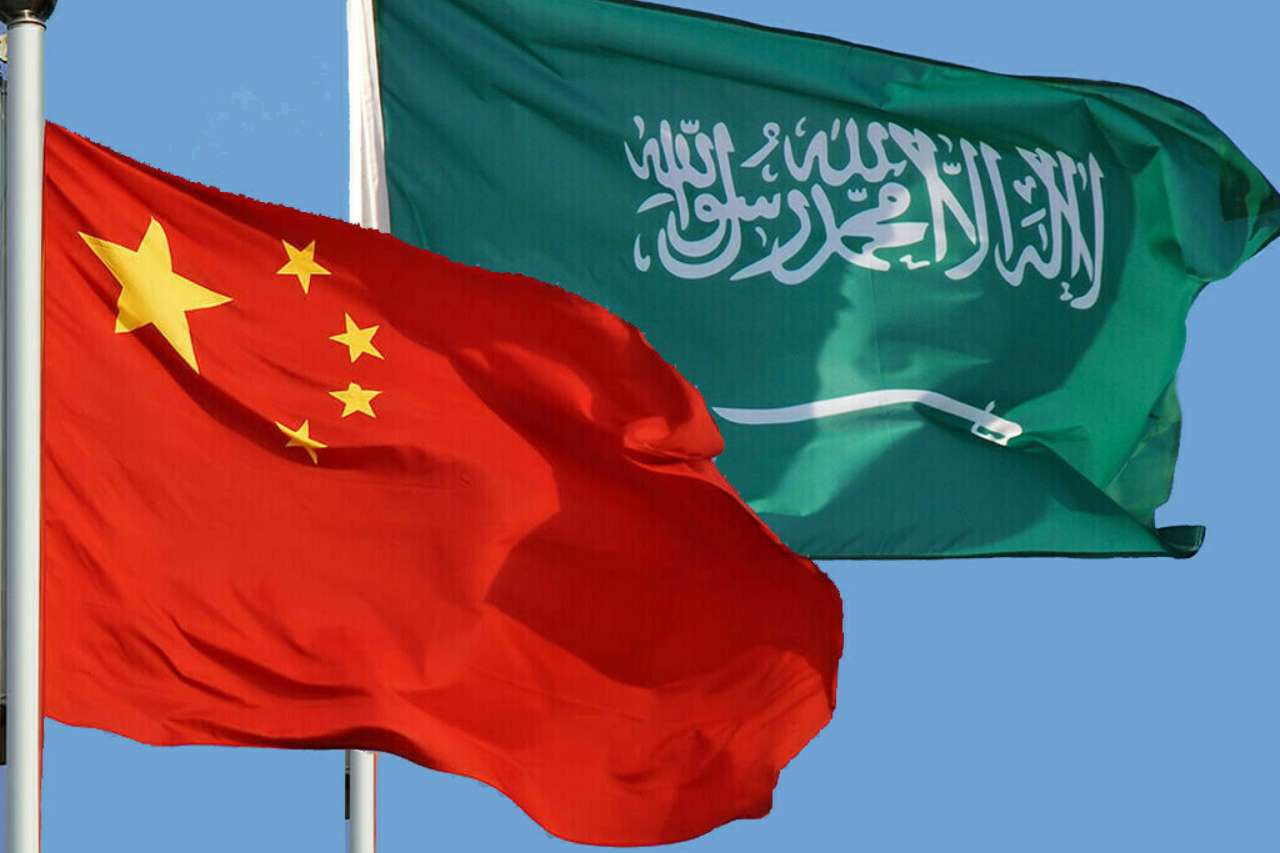
During Chinese President Xi Jinping’s visit to Riyadh in December of the previous year, Saudi officials opted for a purple carpet instead of the traditional red one. The President’s plane was accompanied by fighter jets. Saudi Arabia marked the occasion with green and white smoke, representing the colors on the Gulf nation’s flag, coupled with celebratory gunfire. President Xi Jinping was escorted to the Royal Palace by a royal guard on horseback.
The warm welcome extended during the visit symbolizes the deepening relationship between China and Saudi Arabia, which stands as one of the United States’ closest allies in the Middle East. Eager to strengthen their ties with Saudi Arabia, a goal consistently pursued by Beijing, leader Mohammed bin Salman also demonstrated a willingness to convey goodwill and openness.
In the effort to challenge the worldwide dominance of the USD, China has enacted a strategy by commencing transactions for oil and gas using the Chinese yuan.
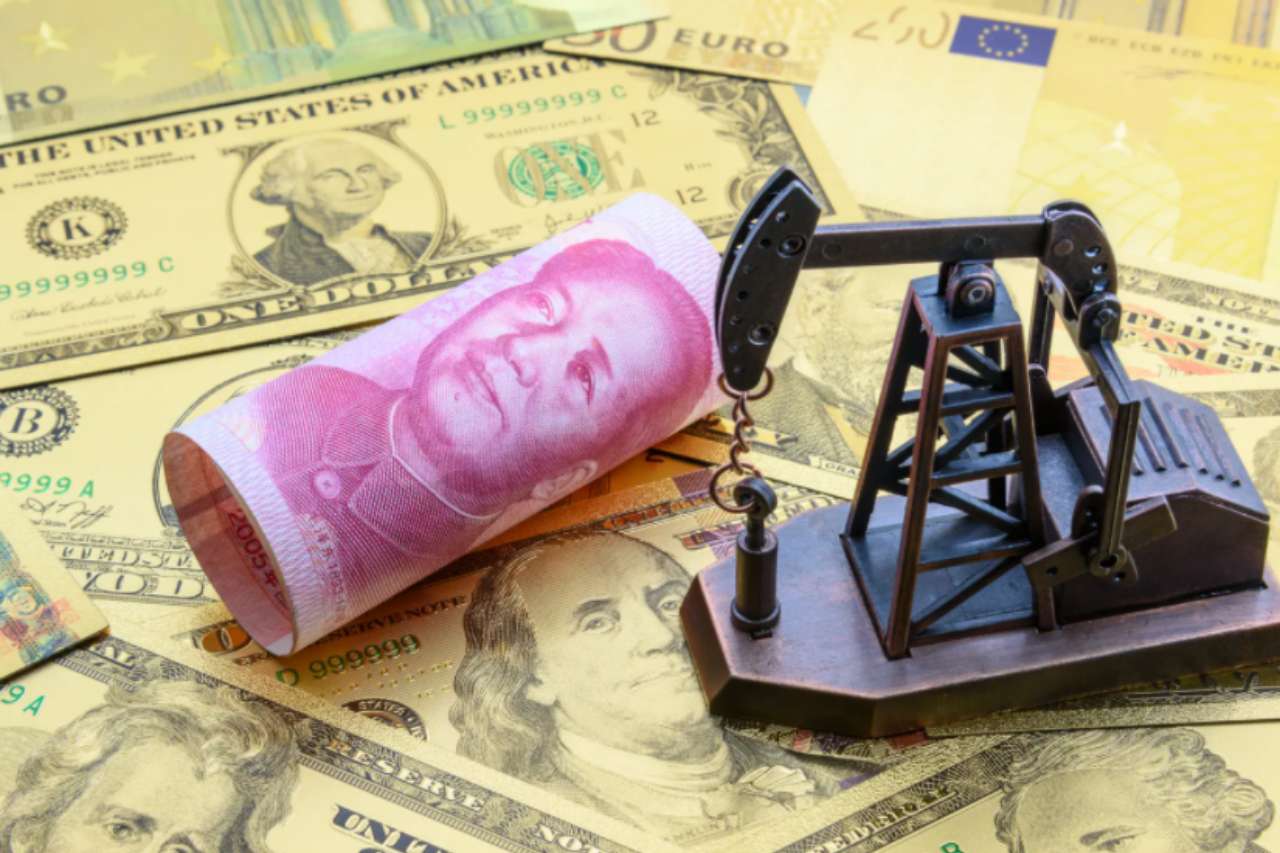
Saudi Arabia, the largest global exporter of crude oil, has exclusively conducted oil transactions in USD since 1974. However, recent negotiations for energy agreements with China, Saudi Arabia’s primary trading partner, have shifted towards transactions in the Chinese yuan. In a breakthrough in November, China took a significant step.
China and Saudi Arabia inked a deal to establish a currency swap line amounting to 50 billion Chinese yuan (approximately 6.98 billion USD). This pivotal agreement grants Saudi Arabia the autonomy to access Chinese currency at a fixed exchange rate, and conversely for Beijing and the riyal.
While the currency swap line itself is not a source of contention, the agreement’s scale is relatively modest, representing only a fraction of the overall trade value between Saudi Arabia and China. Nonetheless, it signifies a noteworthy milestone.
If China opts for Chinese yuan in its oil transactions, these operations would exist outside the Western financial system and be effectively immune to sanctions. The establishment of a framework for a currency swap agreement also facilitates relatively straightforward expansion of the arrangement. Despite the initial modest amount of 50 billion Chinese yuan, there is potential for an increase in the overall scale.
Alicia García-Herrero, Chief Economist for the Asia-Pacific region at the French investment bank Natixis and a senior member of the European think tank Bruegel, observes, “It’s almost a signal that Saudi Arabia is willing to use the Chinese yuan”.
The idea of China challenging the USD’s dominance has been rejected by many economists who view it as implausible. The USD still maintains a unique global standing, given that a substantial portion of global public and private debt is denominated in USD.
As per Swift’s global financial system data, the USD is employed in almost half of all worldwide transactions, whereas the Chinese yuan constitutes less than 4%. Nonetheless, the volume of transactions involving the Chinese yuan is experiencing a remarkable surge. Over the past three years, the utilization of China’s currency in global trade finance has tripled. By September, it had surpassed the euro, becoming the second most utilized currency in global trade. Information from the People’s Bank of China indicates that on a global scale, the usage of China’s central bank swap lines has nearly quadrupled since 2020.
Phyllis Papadavid, a senior research advisor at Asia House, remarked, “The yuan is gaining exponentially in its share of trade finance. It is also gaining traction as a reserve currency. While the overall percentage is still relatively low, the trajectory is increasing very rapidly”.
According to Julia Gurol-Haller, a lecturer at the University of Freiburg’s Chair of International Relations, the likelihood of the Chinese yuan challenging the dominance of the USD in the next few decades is plausible.
In the short term, by securing an agreement with Saudi Arabia, China can protect its energy security amid escalating tensions with the United States.
Christopher Vassallo, a researcher at the China Analysis Centre of the Asia-Pacific Social Policy Institute, suggests, “If China wants to pay for a certain amount of imported oil from Saudi Arabia, they can use their own currency.”
The growing risk of becoming a target for U.S. sanctions has increasingly worried Beijing since the conflict in Ukraine erupted. Vassallo highlights, “Beijing has witnessed Washington imposing sanctions on Russia’s USD reserves”
As per analyst Gurol-Haller, the outbreak of the conflict in Ukraine prompted Saudi Arabia to swiftly adjust its strategy in cultivating relationships with major nations beyond the United States. Prior to the conflict, Saudi Arabia had adopted a risk-averse approach to maintain equilibrium between both the U.S. and China. Mr. Haller observed, “Since February 2022, we have witnessed a significant shift towards China as an economic partner”.
China holds the position as Saudi Arabia’s primary export destination in terms of value, and the kingdom is the second-largest oil supplier to China, following Russia. Beyond oil, the two countries have bolstered their connections in technology, science, and security.
In March, China facilitated a reconciliation agreement between Saudi Arabia and Iran, sidelining the United States.
Mr. Gurol-Haller commented, “This indicates that China is not only seen by countries in the region as an economic partner but also as a rising political or security force. It’s a shift in the paradigm”.
In the same period, Saudi Arabia consented to join the Shanghai Cooperation Organization, a security coalition that includes China and India. During this summer, Saudi Arabia received an invitation to become part of the BRICS alliance, comprising Brazil, Russia, India, China, and South Africa. Discussions among BRICS members have revolved around the creation of a shared currency suitable for use in emerging markets.
The subsequent move for China and Saudi Arabia may involve exploring potential collaborations in the stock exchange arena. In February, Hong Kong Chief Executive John Lee made a trip to Saudi Arabia, aiming to encourage the national oil giant, Saudi Aramco, to consider secondary listings in that region.
“The shared motivation to build an anti-Western bloc will have geopolitical implications for the United States. In the Middle East, we have seen the diminishing role of the U.S. That is precisely the phenomenon that currency swap agreements will significantly amplify”, concluded Mr. Gurol-Haller.
By. Pham Thanh Bien
You might enjoy:


)