





The U.S. stock market saw a dip in points during Friday’s (December 29) trading session but concluded a prosperous year marked by a robust uptrend attributed to reduced inflation, the economic resilience, and indications of the Federal Reserve winding down its interest rate hike initiative. Meanwhile, oil prices experienced a decline of over 10% over the year due to concerns about excess supply.
As the curtains fell on the final trading day of 2023, the S&P 500 registered a 0.28% decrease, settling at 4,769.83 points. This caps the index’s ninth consecutive week of gains, marking its lengthiest winning streak since 2004 and achieving a total gain of 24.4% for the year.
Regrettably for the S&P 500, the most comprehensive gauge of the U.S. stock market, despite recent efforts, fell short of setting a new record in 2023, despite coming close to the all-time high. During Friday’s trading, there were instances when the S&P 500 increased by 9 points, just falling short of 0.2% from the record closing level of 4,796.56 points established in January 2022.
The Dow Jones index (S&P 500) saw a decrease of 20.56 points, equivalent to a 0.05% dip, concluding the year at 37,689.54 points, achieving an annual increase of 13.7%. Prior to this downturn, the index, comprising 30 blue-chip stocks, had previously set an unprecedented closing record.
The Nasdaq index experienced a 0.56% decline, settling at 15,011.35 points. Nevertheless, the gauge for technology stocks, which predominantly surged by 43.4% this year, marked the most substantial annual growth since 2020. This growth is partly attributed to the artificial intelligence (AI) frenzy, prompting investors to flock towards stocks such as Microsoft and Nvidia.
“The market’s upward momentum towards the end of the year remains robust. This truly represents an impressive upswing,” commented senior strategist Mona Mahajan from Edward Jones in an interview with CNBC.
This week, the S&P 500 saw a 0.3% increase, with the Dow Jones and Nasdaq rising by 0.8% and 0.1% respectively, concluding their lengthiest weekly winning streaks since 2019.
The gains achieved in 2023 mark a strong recovery for the U.S. stock market after the sell-off in 2022. Towards the end of the year, the market’s upward momentum was fueled by the Federal Reserve signaling a potential pause in interest rate hikes and anticipating three rate cuts in 2024. Reflecting the anticipated shift in the Fed’s monetary policy, the yield on the 10-year U.S. The Treasury bond dropped from over 5% at the end of October to below 3.9% in Friday’s trading session.
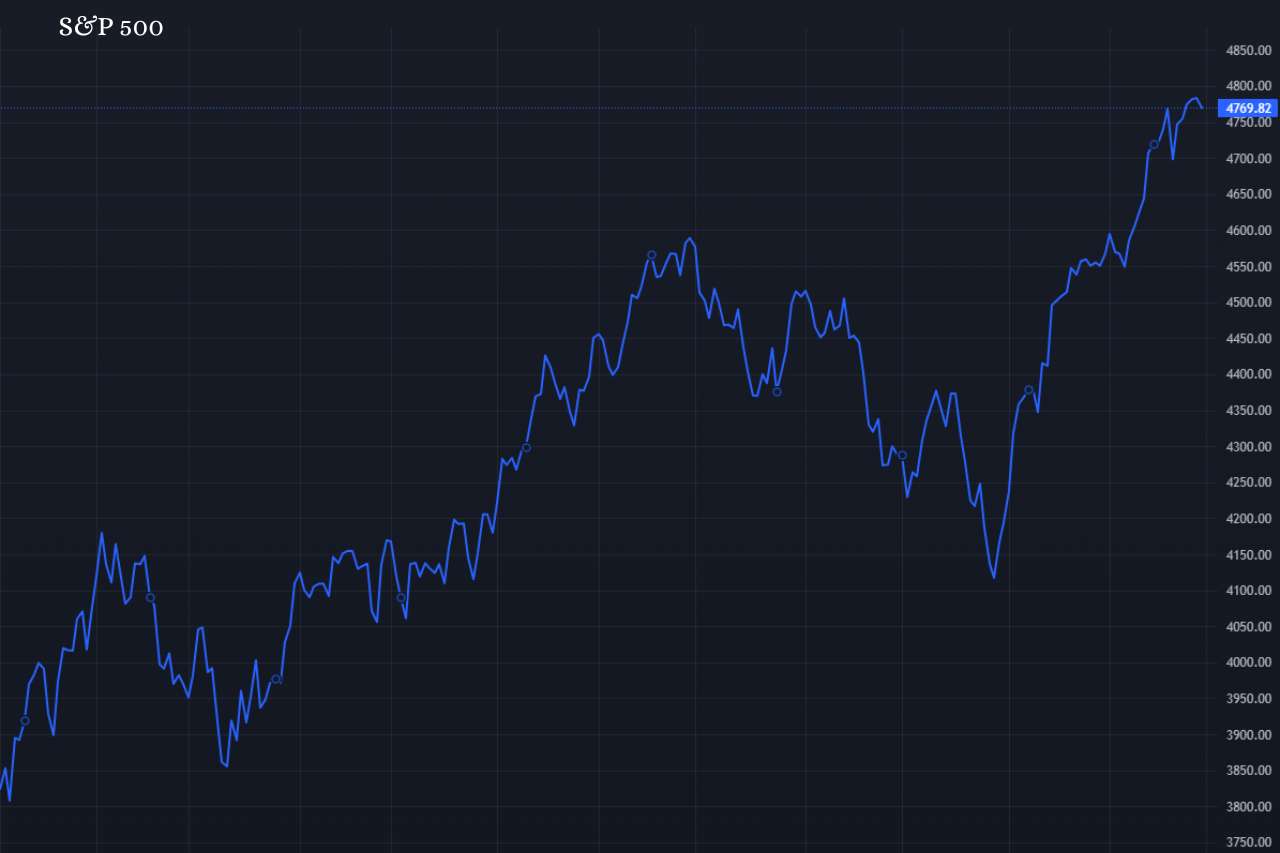
With interest rates on the decline, inflation moderating, and a resilient job market, Wall Street investors are entering the new year with optimism, expecting the U.S. economy to avoid a downturn and experience a ‘soft landing’ in 2024. Fueled by such confidence, the fourth-quarter gains have been widespread, encompassing both blue-chip and small-cap stocks. The Russell 2000 index, representing small-cap stocks, has surged by 12% in December, marking its most robust monthly increase since November 2020 and concluding the strongest quarterly gain since Q4 2020.
Nancy Tengler, CEO of Laffer Tengler Investments, anticipates that the broad-based market upswing will persist into the coming year, but some high-performing stocks may undergo corrections. Ahead of the Fed’s January meeting, investors will closely monitor statements from Fed officials to gain a more nuanced perspective on interest rate prospects. These statements could potentially induce some market fluctuations in the early months of the year.
“The risk for the Fed is that the central bank may reduce interest rates either too slowly or too quickly. If they act too early, inflation could surge back, and that would be bad news for everyone,” said Ms. Tengler.
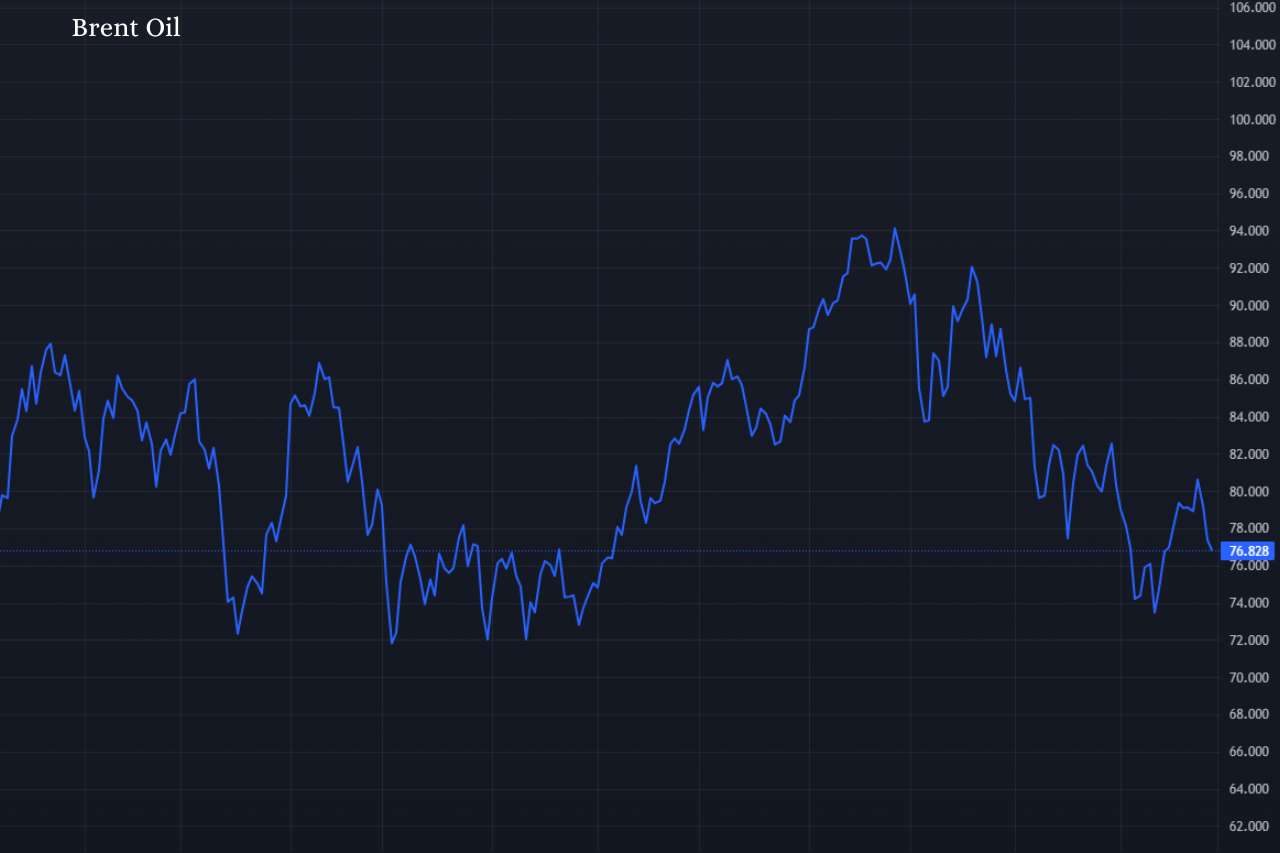
In the energy market, the price of WTI crude oil for February delivery in New York saw a decline of $0.12 per barrel, marking a 0.17% decrease to reach $71.65 per barrel. Similarly, the Brent crude oil price for March delivery in London experienced a $0.11 per barrel drop, equivalent to a 0.14% decrease, settling at $77.04 per barrel.
Over the course of the year, WTI crude oil prices have fallen by 10.73%, and Brent crude oil prices have decreased by 0.32%. This is despite geopolitical tensions in the Middle East due to the ongoing Israel-Hamas conflict in Gaza since October. Contributing to the downward pressure on oil prices in the current year is the record-breaking oil production from certain non-OPEC countries, particularly the United States. This situation raises concerns about the potential for a more rapid increase in oil supply compared to consumption demand.
In the previous week, U.S. oil production reached an unprecedented level of approximately 13.3 million barrels per day. Brazil and Guyana also reported record-high oil production. The clash with the growing oil production outside OPEC is further compounded by the deceleration of major economies, notably China, the largest importer of crude oil globally.
OPEC and its coalition, which includes Russia (referred to as OPEC+), have made a commitment to reduce oil production by 2.2 million barrels per day in the first quarter of 2024. However, there is skepticism in the market regarding the strict implementation of these production cuts, and doubts persist about OPEC+’s ability to achieve a balanced state between oil supply and demand.
The International Energy Agency (IEA) anticipates that the increase in oil production from sources outside of OPEC will surpass the global demand growth in 2024. According to the IEA’s projections, global oil demand growth is expected to decrease to 0.5 million barrels per day, reaching 1.1 million barrels per day in the next year. Meanwhile, the anticipated growth in oil production outside of OPEC is forecasted to be 1.2 million barrels per day.
By. Pham Thanh Bien
You might enjoy:


