




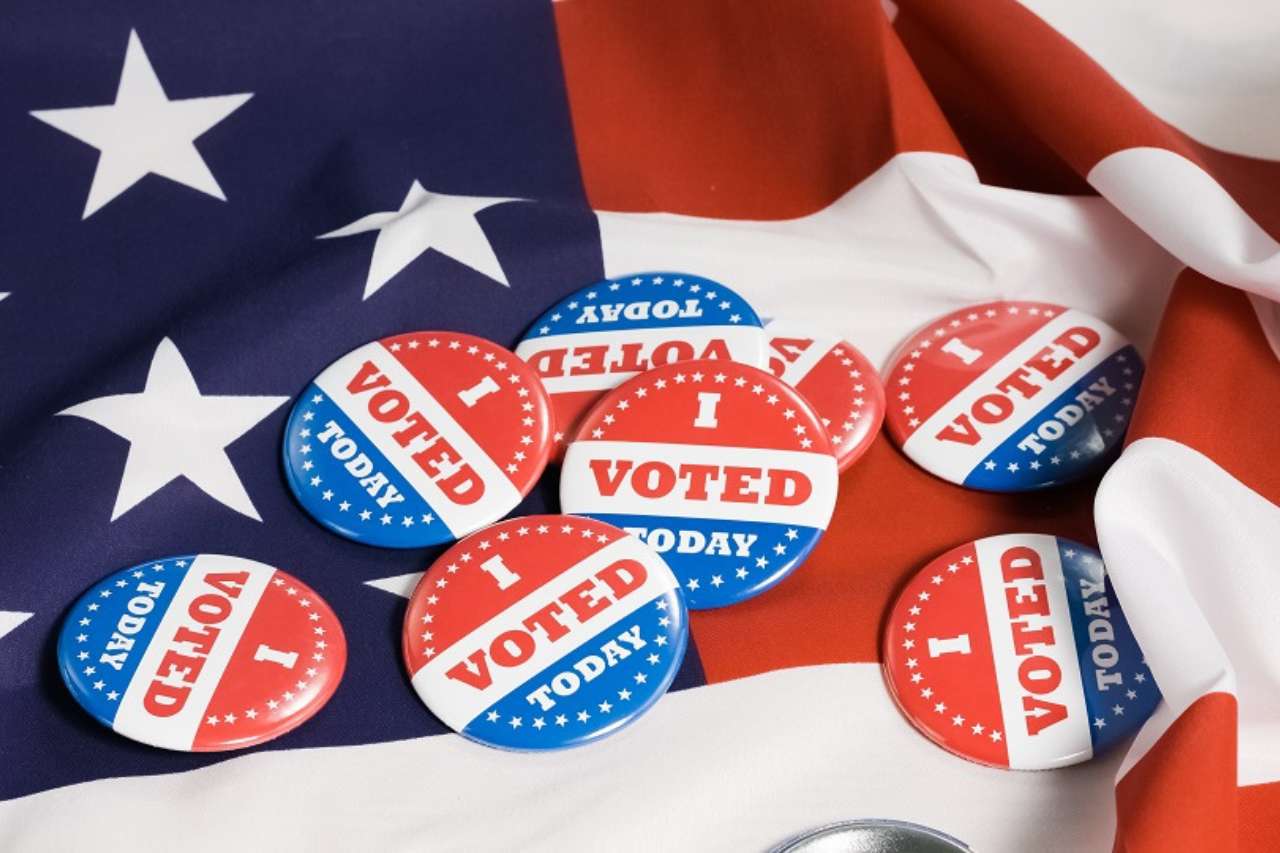
The impending intensification of the U.S. presidential race holds the potential to introduce a new element of complexity to the 2024 markets, prompting investors to assess the possible consequences of post-election adjustments in fiscal spending, taxation, and various policy domains.
While investors have been engrossed in the Federal Reserve’s monetary policy trajectory and the state of the U.S. economy for months, propelling expectations of 2024 rate cuts and fueling a robust stocks rally in late 2023 that brought the S&P 500 near a potential record high, the enduring significance of these factors continues to be crucial for asset valuations.
Although the focus on the Federal Reserve’s policies and economic conditions remains paramount, the initiation of the state-by-state nominating process with the Iowa caucus on Monday introduces a fresh dimension. The likelihood of a closely contested presidential race and profound partisan divisions among voters looms large, potentially introducing unforeseen complexities into the trajectory of the stock market throughout the year.
“The election is introducing an extra layer of uncertainty,” said Irene Tunkel, chief U.S. equity strategist at BCA Research.
The current election landscape suggests a potential rematch between Democrat President Joe Biden and former Republican President Donald Trump, who maintains a significant advantage over other GOP contenders.
Nonetheless, according to analysts at Goldman Sachs, a reduction in the Republican candidate pool after the Iowa caucus might lead to increased competition for the party’s nomination. In a note on Monday, they mentioned that if the field were to narrow down to Trump and former South Carolina Governor Nikki Haley, Trump’s lead in the upcoming New Hampshire primary could diminish to approximately 3%.
“Uncertainty tends to rise at the start of presidential election years, and that pattern looks particularly likely to hold in 2024,” the bank’s analysts said.
When a sitting president seeks re-election, as President Biden is doing this year, historical data indicates an above-average performance for U.S. stocks. According to Sam Stovall, the chief investment strategist at CFRA, since World War II, the S&P 500 has shown gains in all 14 instances when a president sought re-election, regardless of the election outcome. The average total return during these periods was 15.5%, surpassing the index’s average annual return of 12.8% in that timeframe.
Looking at the broader historical context since 1928, RBC Capital Markets notes that the S&P 500 has, on average, gained around 7.5% in presidential election years.
Despite these positive trends, seasonal patterns in election years suggest that the market journey can be uneven. Specifically, the initial three months of an election year often exhibit volatility for stocks, with the S&P 500 typically showing limited movement, as noted by Keith Lerner, co-chief investment officer at Truist Advisory Services. Additionally, the three months leading up to Election Day in early November tend to be characterized by increased market volatility.
The seasonal pattern of election years “does provide another reason to be on guard for an early year pullback,” Lori Calvasina, RBC’s head of U.S. equity strategy, said in a note on Monday.
In the current year, investors will closely monitor tax and spending policies. Former President Trump implemented tax cuts during his term, scheduled to expire in 2025, and Republicans are anticipated to aim at preventing their expiration.
On the Democratic front, President Biden, along with his party, is expected to advocate for tax increases on corporations and the affluent. Their agenda also includes increased spending to enhance the social safety net, particularly in areas such as childcare investments and initiatives to promote clean energy and reduce prescription drug costs, according to Oxford Economics.
If an economic downturn occurs this year, the elections are likely to become a heightened focus for the market, as noted by Matthew Miskin, co-chief investment strategist at John Hancock Investment Management.
“If the economy does start to decelerate and we potentially see a recession, then the fiscal response and who becomes the political leader will become much more important to markets,” Miskin said.
As the election progresses and policy proposals take shape, specific segments of the stock market may experience heightened volatility, particularly those related to healthcare costs, defense spending, or energy regulations.
In past elections, certain sectors experienced notable shifts. For instance, in the 2020 election, solar stocks saw an increase in value as Biden’s electoral prospects improved. In contrast, Trump’s victory in 2016 led to a “reflation trade,” boosting various sectors due to expectations of more lenient fiscal policy.
However, some investors question the lasting impact of elections on markets. One potential moderating factor is the anticipation of a divided Congress post-election, limiting the potential for radical policy changes. Despite the potential for election-induced volatility, Jack Janasiewicz, a portfolio manager at Natixis Investment Managers Solutions, emphasizes that the most critical factor remains the stage of the economic cycle.
According to Reuters.
By. Pham Thanh Bien
You might enjoy:


