




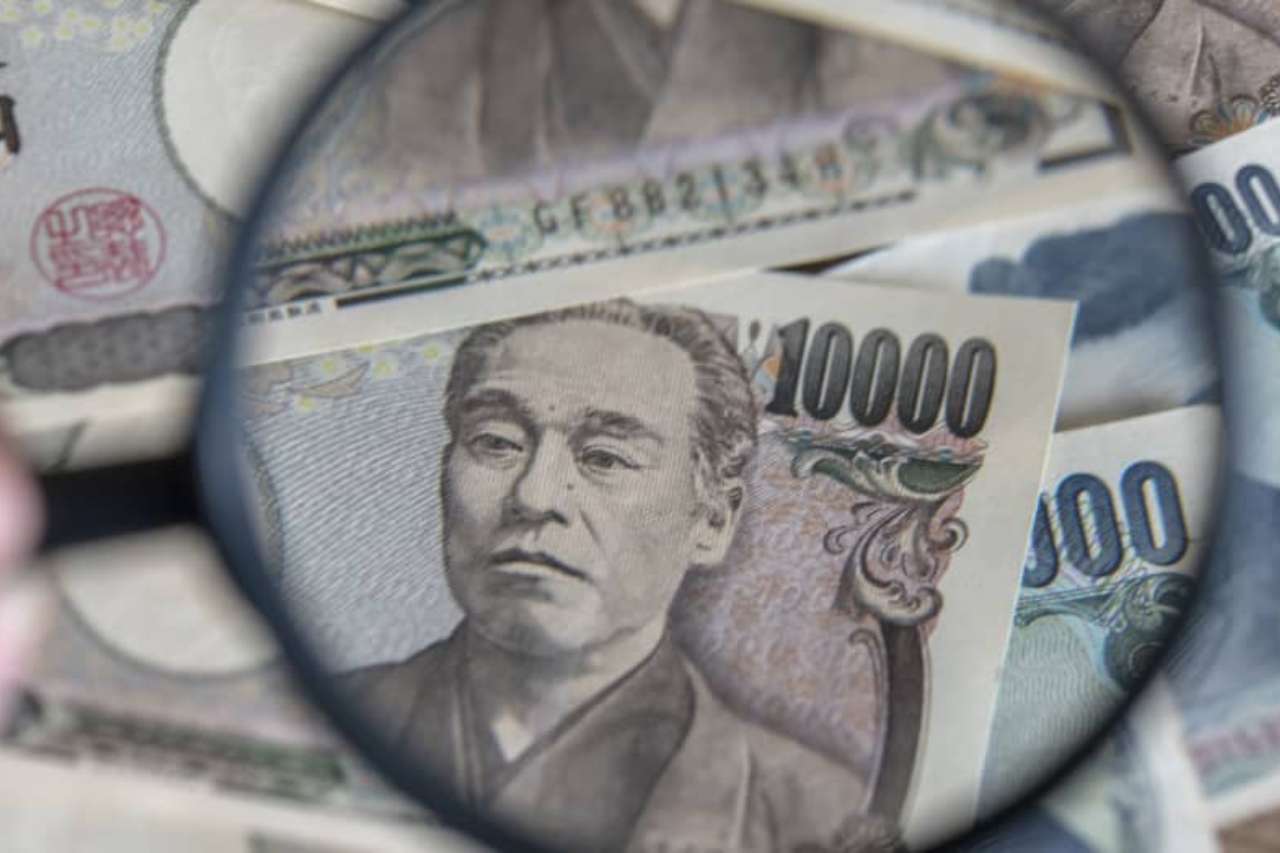
Yen experienced its most significant price surge in nearly a year during the trading session on December 7, following a notably explicit signal from the Bank of Japan (BOJ) regarding a potential shift in monetary policy amid the pandemic.
At the New York market’s close, USD experienced a depreciation of over 2.6% against the yen, settling at 143.465 yen per USD.
At various points during the session, the dollar saw a decline of up to 3.8% against the Japanese currency, propelling the yen’s exchange rate to its highest point in the last three months. Concurrently, the yield on Japan’s 10-year government bonds rose to 0.75%.
During remarks on December 7th, BOJ Governor Kazuo Ueda conveyed that the central bank has multiple options concerning the interest rate target once short-term borrowing rates emerge from the prolonged negative territory. This is perceived by the market as a potential indication that BOJ might be veering away from its ultra-loose monetary policy, contributing to a substantial strengthening of the yen.
When BOJ implements a tighter monetary policy, it will be in contrast to other central banks like the U.S. Federal Reserve (Fed), the European Central Bank (ECB), and the Bank of England (BOE), all of which are anticipated to initiate interest rate cuts in 2024. This divergence is likely to have a positive impact on the yen’s exchange rate.
Over the past few years, BOJ has been diverging from the global trend in monetary policy by maintaining an exceptionally loose policy to spur economic growth and inflation. Meanwhile, other major central banks have been actively adopting tightening measures to address inflation. This discrepancy has placed considerable upward pressure on yen, making it the most appreciating currency this year, reaching levels not seen in three decades against USD at times.
“The recent BOJ statements are generating speculation that the central bank might eventually raise interest rates back into positive territory”, stated Karl Schammotta, a strategist at Corpay.
In light of yen’s recent decline to sensitive levels, there has been ongoing speculation regarding potential intervention by the Japanese Ministry of Finance to revive the domestic currency’s exchange rate. However, it appears that Japanese authorities have refrained from intervening in the currency market this year, following the initial intervention last year after many years.
“The market has been actively shorting the yen, and there is a consensus that 2024 could mark the year Japan terminates its negative interest rate policy. Consequently, the market is poised to shift at the first signs of such indications”, commented Michael Brown, a strategist at TraderX, as reported by Reuters.
During Friday’s trading session, fluctuations in currency exchange rates among major currencies are likely to be influenced by the November employment report from the U.S. Labor Department. Over the next two weeks, the final monetary policy meetings of 2023 are scheduled for several major central banks, including Fed on Wednesday this week, ECB on Thursday this week, and BOJ on the following Tuesday.
Fed is anticipated to maintain unchanged interest rates at this meeting. Additionally, futures market data from CME’s FedWatch Tool indicates a 60% probability that the Fed will commence interest rate cuts in March 2024, up from 50% a week ago.
Simultaneously, as reported by Bloomberg, the financial market experienced moments on Thursday where there was a 45% likelihood that BOJ would conclude its negative interest rate policy in this December meeting. Two days earlier, this probability stood at only 3.5%.
“The recovery in the bond market during November has set the stage for BOJ to make adjustments to monetary policy before Christmas. Nevertheless, BOJ has explicitly stated that any modifications will be measured and gradual”, conveyed Althea Spinozzi, a strategist at Saxo Bank, in comments to Bloomberg.
According to a Bloomberg-conducted survey of economists, there is an expectation that BOJ will conclude its negative interest rate stance before the end of April 2024. Over half of the surveyed economists anticipate a rate hike in April. In the October survey, only 29% foresaw BOJ raising rates in April.
“The most favorable scenario is the cessation of negative interest rates in April. However, there is a slight possibility that BOJ might opt to raise rates in January or March, aiming to take early action amidst financial market and political uncertainties”, noted Yasunari Ueno, Chief Economist at Mizuho Securities, as reported by Bloomberg.
According to VnEconomy.
By. Pham Thanh Bien
You might enjoy:
- Treasuries have Bounced too quickly after Blistering Rally
- The Bank Of Canada (BoC) And Monetary Policy: Early 2024 And The Next Steps


 regarding a potential shift in monetary policy amid the pandemic.)