




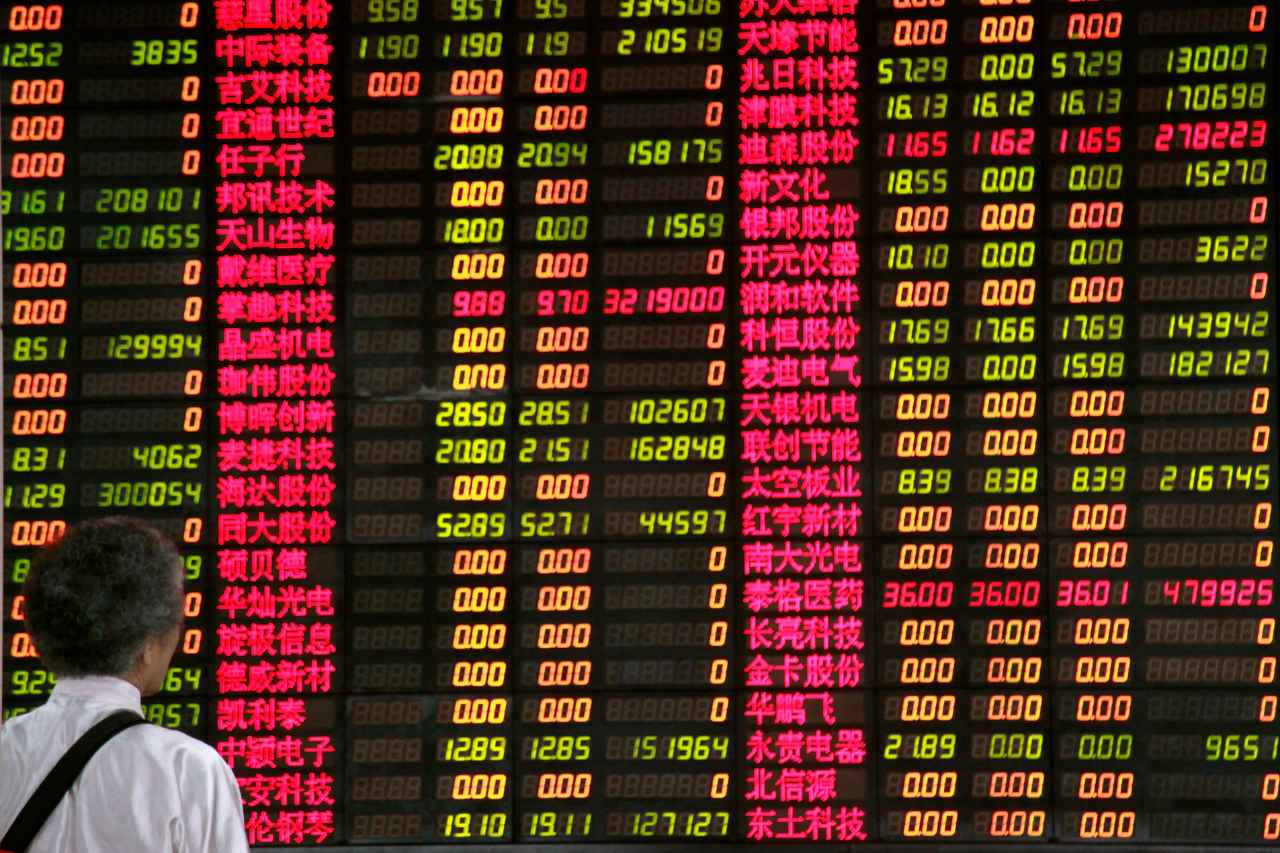
Chinese authorities are reportedly contemplating a support package to stabilize their country’s rapidly declining stock market, according to insider sources cited by Bloomberg. This consideration comes in response to Beijing’s unsuccessful attempts to restore investor confidence, prompting Premier Li Keqiang to call for more robust measures.
Insiders, requesting anonymity, disclosed that policymakers are weighing the mobilization of around 2 trillion yuan, approximately $278 billion, primarily sourced from the offshore accounts of state-owned enterprises within mainland China. This fund would constitute part of a stabilization fund designed to acquire stocks on the mainland through trading connections with the Hong Kong market. Furthermore, authorities have earmarked at least 300 billion yuan from the funds of local governments to purchase stocks on the mainland through entities like the China Securities Finance Corp. (CSFS) or Central Huijin Investment Ltd., according to the sources.
These sources also suggest that regulatory bodies are exploring alternative options, and any potential plans may be announced as early as this week if approved by senior leadership, with the details subject to change.
The consideration reflects an increasing worry among Chinese authorities as the downward trend has led the CSI 300 index of the mainland stock market to its lowest point in five years during Monday’s trading session. Stabilizing the market to boost the confidence of individual stock investors in China, many of whom have experienced a significant reduction in wealth due to the real estate crisis, is viewed as a crucial element for maintaining social stability.
However, there is uncertainty about whether the measures China is contemplating are sufficient to halt the downward trend. The real estate crisis, declining consumer confidence, a sharp decrease in foreign investment, and weakening domestic business confidence are factors exerting pressure on both China’s economy and financial markets.
China’s previous attempts to stabilize the stock market, especially in 2015, often did not achieve the desired effectiveness and, in some cases, had counterproductive outcomes. Authorities, up to now, are hesitant to introduce a substantial economic stimulus package as anticipated by investors.
A State Council meeting in China on Monday, led by Premier Li Keqiang, evaluated the financial market situation and provided considerations for related actions—a formal statement said without disclosing specific details about those considerations.
“It appears they have prepared to respond to the recent decline in the stock market. The market is problematic enough to attract significant attention from authorities. China can’t allow A-shares to continue falling until the Chinese New Year holiday”, remarked Neo Wang, a researcher at Evercore ISI.
Since its peak in 2021, stock exchanges in mainland China and Hong Kong have lost over $6 trillion in market capitalization. This figure reflects the challenge Beijing faces in halting the erosion of investor confidence.
In recent months, China has implemented minor measures to improve the market, but investor frustration seems unabated. Instead, investors continue to urge Beijing to adopt more robust stimulus policies. Authorities have restricted short-selling activities, and state funds have purchased shares of major banks. The idea of establishing a state-backed market stabilization fund has been under consideration since at least October last year, but some express doubts about the effectiveness of such a fund.
During the market downturn in 2015, China mobilized CSFS to play a central stabilization role by allowing it access to up to CNY 3 trillion in borrowed funds from sources including the People’s Bank of China (PBOC) and commercial banks. CSFS used this money to directly purchase stocks and provide liquidity to securities firms. However, market stability only returned a year later.
Sources suggest that this time, Chinese officials aim to use funds from outside mainland China to minimize the impact on the weakened exchange rate of the renminbi.
According to Bloomberg.
By. Pham Thanh Bien
You might enjoy:


