





Singapore’s Asia Genesis Asset Management has recently shuttered a macro fund due to unprecedented losses stemming from the decline in Chinese stocks and the significant surge in the Japanese market.
The Asia Genesis Macro Fund, established and managed by Chua Soon Hock, incurred losses of approximately 18.8% in the early weeks of 2024, as stated in a letter sent to clients and obtained by Bloomberg.
The fund is currently in the process of returning funds to investors after facing setbacks in long positions in Chinese and Hong Kong stocks. It also suffered losses due to short positions in Japanese equities. As of the beginning of 2024, the Asia Genesis Macro Fund managed around $330.2 million for its clients.
In the letter, Chua expressed, “I no longer have confidence in my investment capabilities. The investment environment has been challenging since October 2023, and the January catastrophe demonstrated that past experiences are no longer valuable and even detrimental to me”.
Chua noted that the Asia Genesis Macro Fund made a “major mistake” by attempting to bottom-fish in Hong Kong-listed stocks. He also expressed surprise at the current parity between Japan’s Nikkei 225 index and China’s Hang Seng index, which is comparable to the situation in 1991.
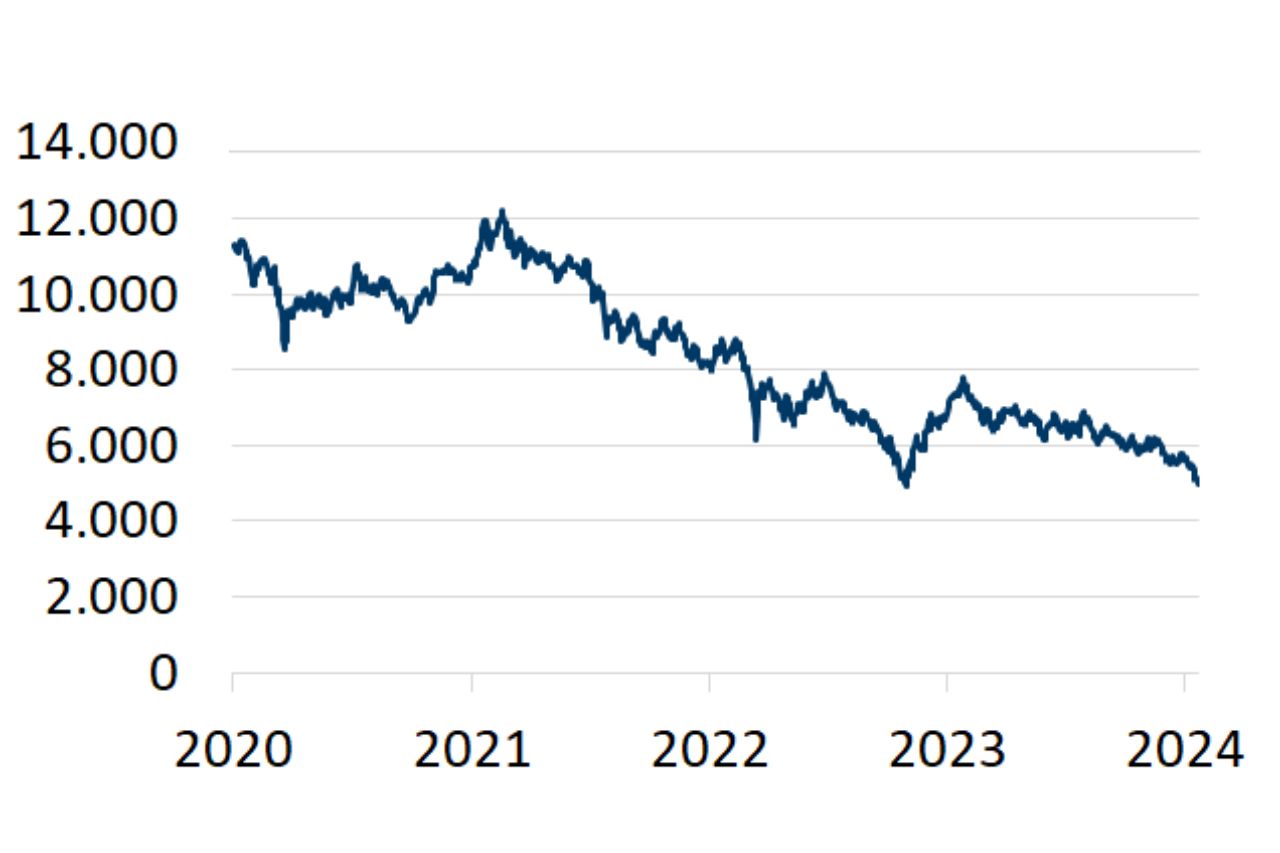
On January 22, China’s CSI 300 index experienced a five-year low due to escalating deflationary pressures and the burden of a real estate crisis on economic growth. The Hang Seng China Enterprises Index, which measures Chinese stocks listed in Hong Kong, has seen a decline of over 50% since the end of 2020.
Conversely, Japanese stocks are flourishing. Both Topix and Nikkei 225, major stock indices, have reached their highest levels in over 30 years in January. Authorities and stock exchanges in Japan are advocating for companies to enhance shareholder value and improve corporate governance.
The recent sell-off in China indicates a prevailing pessimistic investor sentiment. Premier Li Keqiang, on January 22, called for stronger measures to stabilize the market and restore investor confidence.
Following a meeting led by Premier Li, leaders emphasized the need for Beijing to enhance policy consistency to reinforce economic recovery.
Chinese policymakers have, so far, refrained from implementing significant measures to stimulate growth. During last week’s World Economic Forum in Davos, Premier Li highlighted that China’s GDP growth rate in 2023 surpassed the official target without requiring “massive stimulus.”
In his letter, Chua from Asia Genesis Macro Fund expressed disappointment over Beijing’s lack of decisive measures to counter deflation.
Chua’s final hope rested on the People’s Bank of China (PBoC) cutting interest rates in its meeting early this month. However, contrary to market expectations, PBoC kept interest rates on one-year policy loans unchanged.
Chua observed that President Xi Jinping’s priority does not lie with the stock market. Consequently, his fund closed all positions on January 18.
In the past, Chua managed a macro fund focused on the Japanese market, achieving an annual return rate of 18.7% from 2000 to 2009. After a period of retirement and exiting the hedge fund industry, he returned to establish a new fund in 2020.
His macro fund generated an annual return rate of approximately 7.9% since its establishment in May 2020 until the end of 2023, with no losing years.
Chua expressed, “I have lost the edge in knowledge, trading, and investment psychology. Short- and long-term risk/reward rules have been overturned”.
By. Pham Thanh Bien
You might enjoy:


