




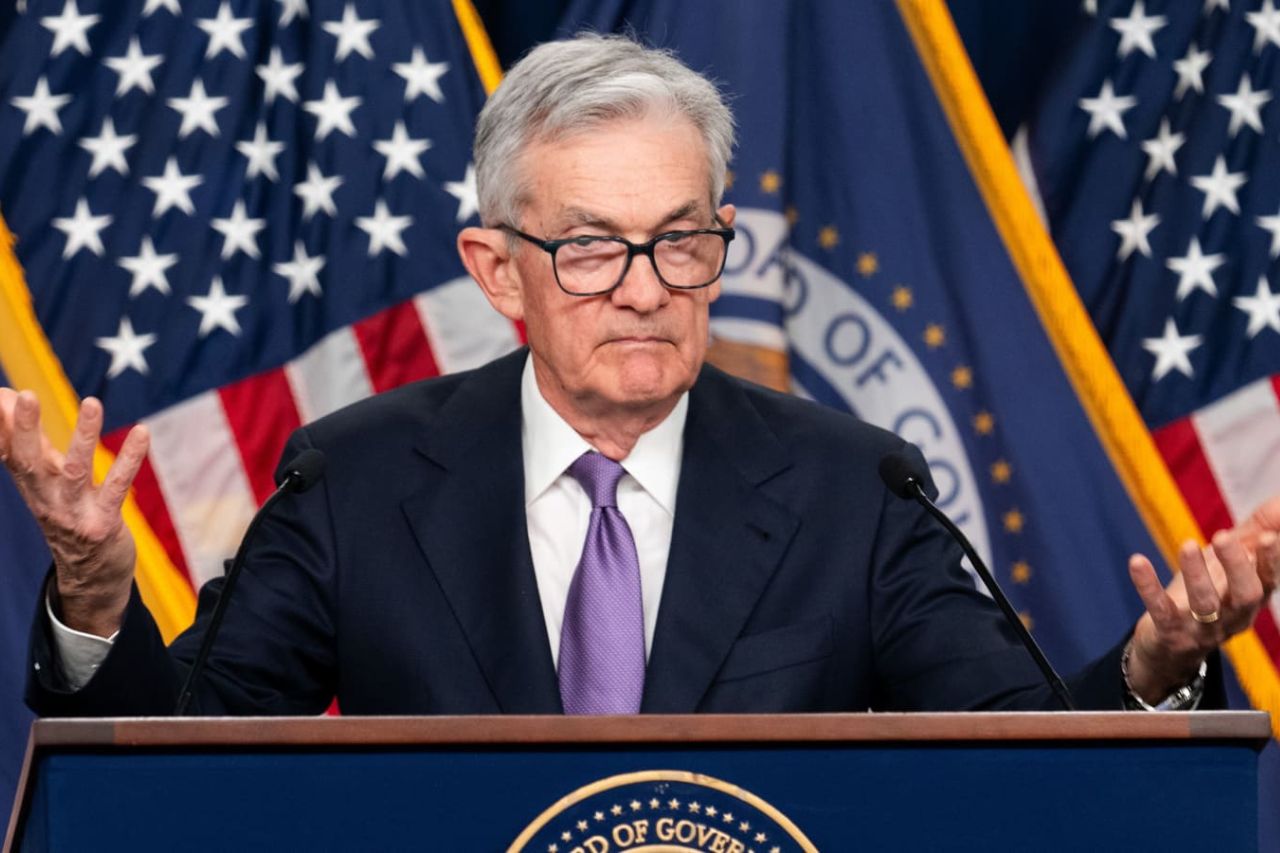
The 2-day policy meeting concluded with the U.S. Federal Reserve (Fed) deciding to keep the baseline interest rate unchanged and indicating a willingness to potentially cut rates, although not necessarily immediately.
This marks the fourth consecutive meeting where the Fed has maintained the target range for the baseline interest rate at 5.25%-5.5%, the highest level in 22 years. Additionally, the Fed plans to persist in reducing its balance sheet by $95 billion per month.
Following the meeting, Fed Chairman Jerome Powell addressed the media, stating, “We believe there’s a high likelihood that interest rates are at the peak of this tightening cycle, and if the economy performs as anticipated, it would be suitable to initiate some policy reversals at some point this year”.
He noted that the stringent monetary policy is exerting pressure on both the economy and inflation. Given recent inflation figures, policymakers are acutely aware of the challenges inflation poses to American households. The Fed still requires additional time to ensure that inflation is decreasing in a sustainable manner. Powell emphasized, “The Fed is not waiting for improved figures but is anticipating the continuation of positive data to feel confident about inflation”.
Following this meeting, the Federal Reserve (Fed) officials abandoned the previous notion from prior meetings that there was a chance of increasing interest rates. Instead, they presented a more balanced statement, indicating that “any adjustments to the federal funds rate will be made after a careful evaluation by the Federal Open Market Committee (FOMC) of upcoming data, the economic outlook, and a consideration of risks”.
However, in a move suggesting that Fed officials are not in a hurry to decrease interest rates, the FOMC stressed that “reducing the interest rate target is appropriate only when the Fed is confident that inflation is consistently heading towards the 2% mark”.
The Fed’s announcement today also omitted the phrase “strong and resilient” when characterizing the U.S. banking system. Additionally, the Fed cautioned that stricter credit conditions could have an impact on the world’s largest economy.
In summary, the U.S. economy outperformed policymakers’ expectations last year. Inflation rates decreased more than anticipated, closing 2023 at 2.6% according to the Fed’s preferred measure. GDP saw a growth of 2.5%, and the job market remained robust with a 3.7% unemployment rate in December, matching the level from March 2022 when the Fed began raising interest rates.
After the December meeting, the market was optimistic about the possibility of the Fed promptly reducing interest rates. However, recent statements from certain Fed officials have tempered investors’ expectations for immediate and substantial interest rate cuts.
“With positive economic activity and a strong labor market, coupled with inflation gradually easing to 2%, I see no reason for the Fed to take swift action”, remarked Fed Governor Christopher Waller at an event on January 16.
The Fed is grappling with what is arguably its “most challenging” task in over a century: controlling inflation by tightening credit without triggering a recession in the U.S. This challenge becomes even more intricate in 2024, an election year, amid profound political divisions in the United States.
By. Pham Thanh Bien
You might enjoy:


