




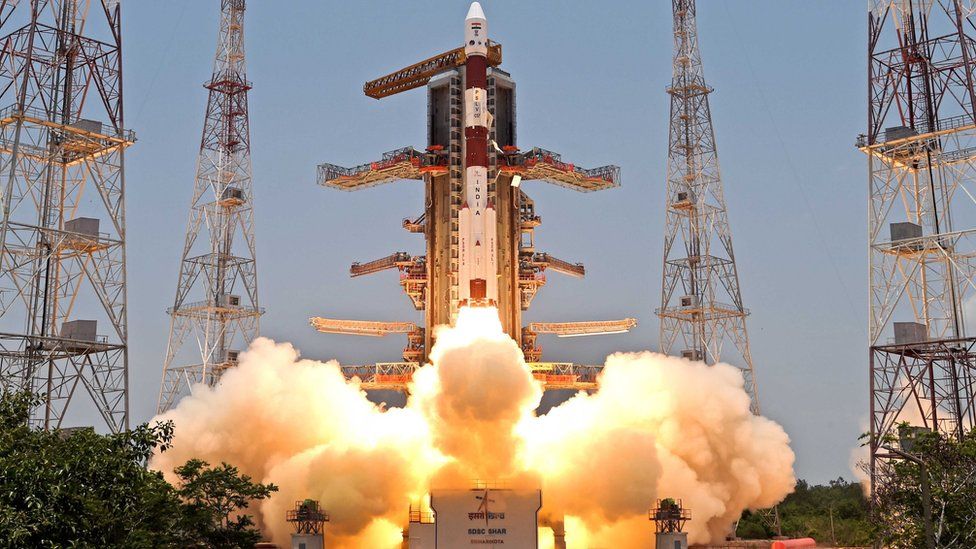
The Solar Observatory aims to uncover some of the biggest mysteries about the star, including:
1. Unraveling the Sun’s Extreme Temperatures
Scientists are particularly interested in the solar corona, composed of plasma and known for its extreme heat, reaching up to 1.1 million degrees Celsius according to NASA. In contrast, the photosphere, located 1,600 km below the corona, has an average temperature of around 5,500 degrees Celsius, meaning the outer atmosphere of the Sun is much hotter, approximately 200 times hotter than its surface.
2. Investigating Solar Weather
Coronal Mass Ejections (CMEs) are massive clouds of plasma ejected into space when the Sun’s magnetic field twists and releases. This phenomenon occurs predominantly in active regions of the Sun, revealing the presence of sunspots. Sunspots can lead to solar flares, electromagnetic radiation bursts often associated with CMEs but also occurring independently. CMEs can travel at speeds up to 11 million km/h, which is about 4,500 times the maximum speed of fighter jets.
Aditya-L1 will study the mechanisms driving these phenomena, examining processes within the solar corona and deeper layers of the Sun. Furthermore, the spacecraft will monitor such events as they move away from the Sun, potentially reaching Earth within 15 to 18 hours.
3. Analyzing Changes in Solar Wind
Aditya-L1 will investigate changes in plasma as it journeys from the Sun to Earth. The spacecraft will also conduct various measurements of the plasma environment near Earth using the Aditya Solar Wind Particle Experiment (ASPEX) and the Plasma Analyzer for Aditya (PAPA).
The charged particles released by CMEs, directed toward Earth, will be obstructed by the planet’s magnetic field. Subsequently, they collide with oxygen and nitrogen atoms in Earth’s upper atmosphere, creating auroras. However, CMEs can cause disruptions such as severe geomagnetic storms that impact satellites, communication systems, and Earth’s power infrastructure. Therefore, understanding space weather and Earth’s plasma environment is of paramount importance. Additionally, Aditya-L1 will investigate the planetary magnetic field using the High-Resolution Solar Three-Axis Magnetic Analyzer (STAR).
4. Investigating Solar Magnetic Structures
Aditya-L1 will examine magnetic loops in the solar corona, large-scale plasma structures formed as the magnetic field extends beyond the photosphere, guiding plasma with it. These loops can span thousands of kilometers, giving the Sun the appearance of a vast tangled ball of yarn. Magnetic loops in the solar corona appear to be associated with sunspots and often extend from one sunspot to another. The three-dimensional structure of coronal loops remains a puzzle, and recent research suggests they may not expand significantly in height.
Aditya-L1 will study these magnetic loops and the plasma that composes them, measuring their temperature, velocity, and density. This mission will help unravel the structure and dynamics of these enigmatic solar phenomena.
From probing the Sun’s extreme temperatures to studying the solar weather and magnetic structures, Aditya-L1, India’s solar probe, is embarking on a crucial mission that promises to deepen our understanding of this powerful star. This achievement is a source of pride not only for India’s space science and technology but for humanity as a whole.
Reference: The Space
May be you might enjoy:


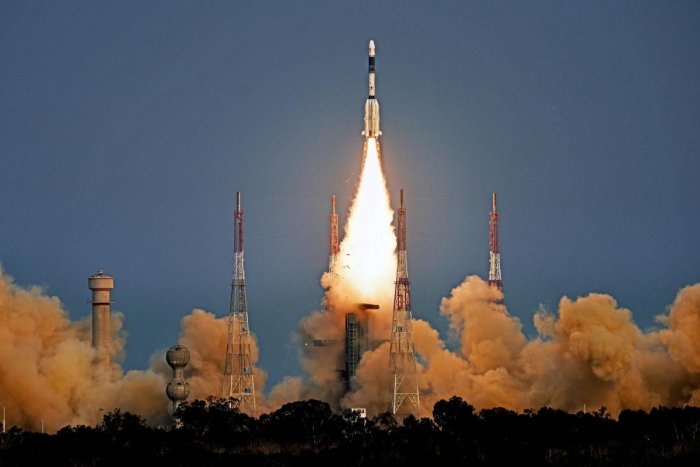
 successfully launched the Aditya-L1 solar probe from the Satish Dhawan Space Centre at 11:50 Indian time on September 2)