





A single corrective wave within an uptrend consists of minor price declines, forming lower peaks, or potentially moving sideways. The crucial aspect is that corrective waves encompass BOTH UPWARD AND DOWNWARD PRICE MOVEMENTS WITH SMALLER AMPLITUDES. This is a crucial feature to differentiate them from impulse waves.
The corrective wave pattern is a structure comprising three countertrend waves compared to the primary impulse wave pattern.
To distinguish corrective waves from impulse waves easily, they are labeled with the letters A-B-C, W-X-Y-Z (impulse waves are numbered from 1-5).
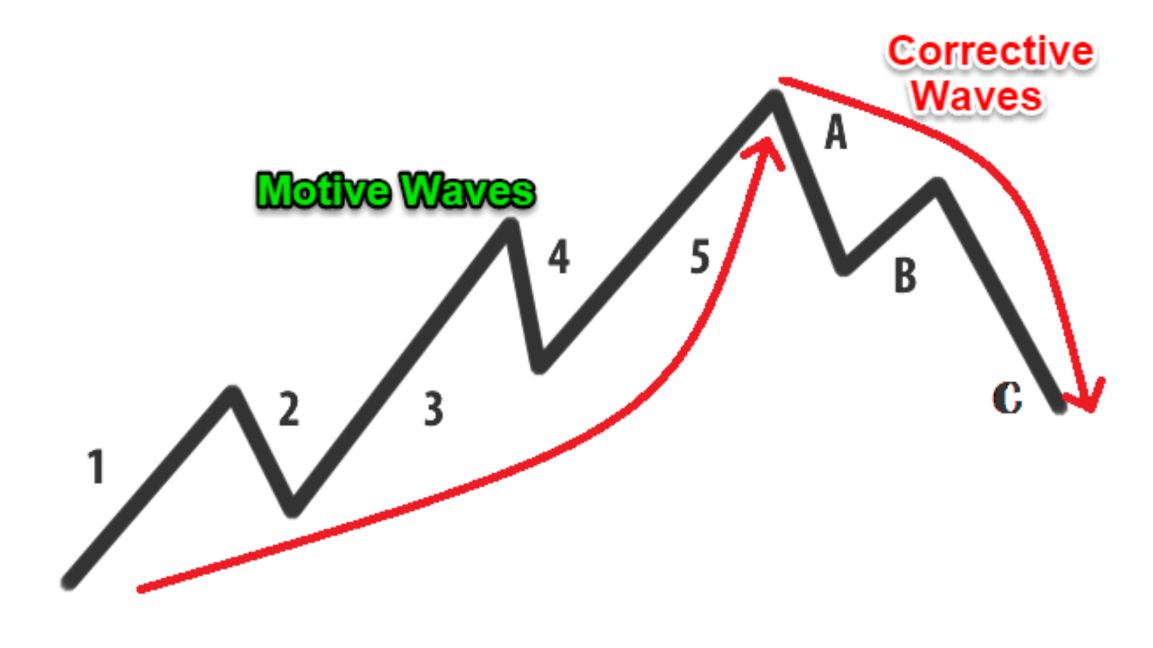
Corrective wave divides into 3 main models:
- Zigzag wave
- Flat wave
- Triangle wave
Zigzag wave
The Zigzag (ZZ) wave pattern consists of a 3-wave structure labeled as A-B-C, generally moving counter to the main trend. The Zigzag pattern often appears in Wave A, Wave X, or Wave 2. It also frequently emerges in Wave B as part of a Flat pattern, a triangle pattern, and occasionally in Wave 4. This is one of the most common corrective Elliott wave patterns.
The Single Zigzag pattern comprises 3 waves. The Double Zigzag pattern consists of 7 waves, separated by a Wave X in the middle. The Triple Zigzag pattern includes 11 waves, divided by 2 Wave X segments in the middle. The internal structure of Wave 3 in a Single Zigzag follows a 5-3-5 sequence, while in a Double Zigzag it follows 5-3-5-3-5-3-5.
A more modern representation of the Double Zigzag pattern uses the WXY style instead of ABCXABC. In this approach, the two smaller-degree zigzags are connected by waves at a higher degree. So, instead of using 7 waves (ABCXABC), daily chart analysis could use a 3-wave style (WXY). Using this method, the Triple Zigzag pattern can be represented as WXYXZ rather than ABCXABCXABC. This way, the wave count is simplified to 5 waves instead of 11 waves.
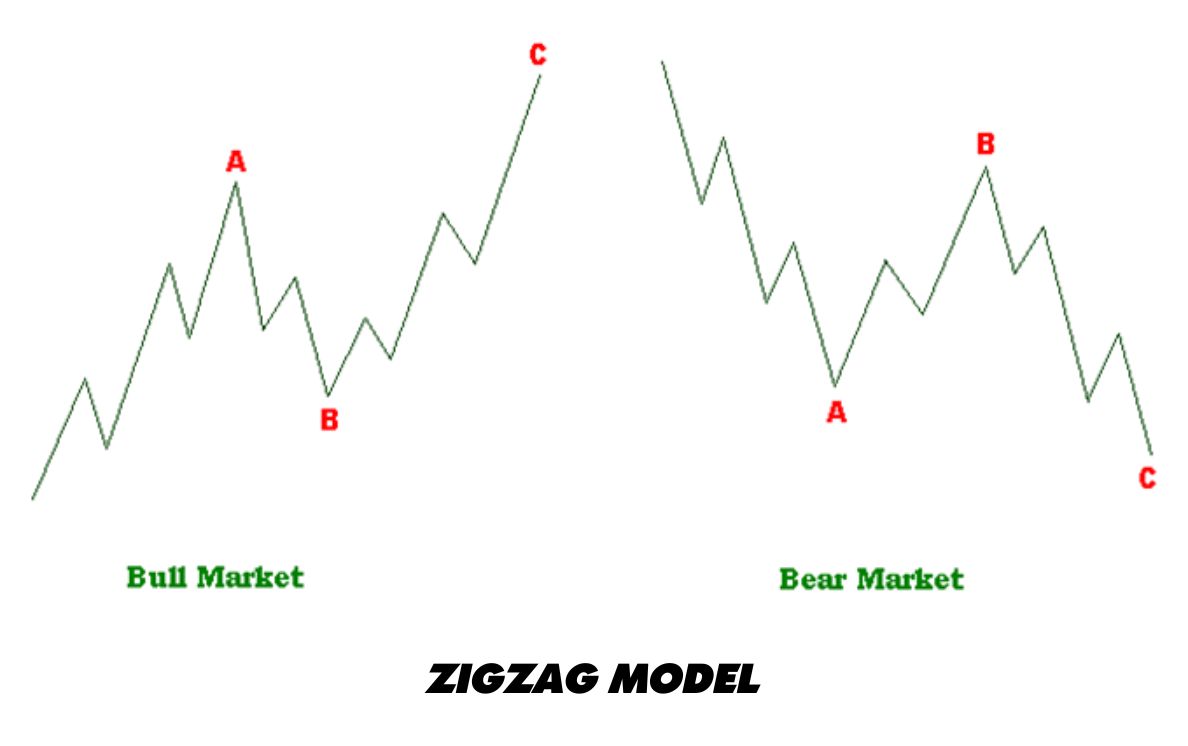
Principles of Zigzag wave
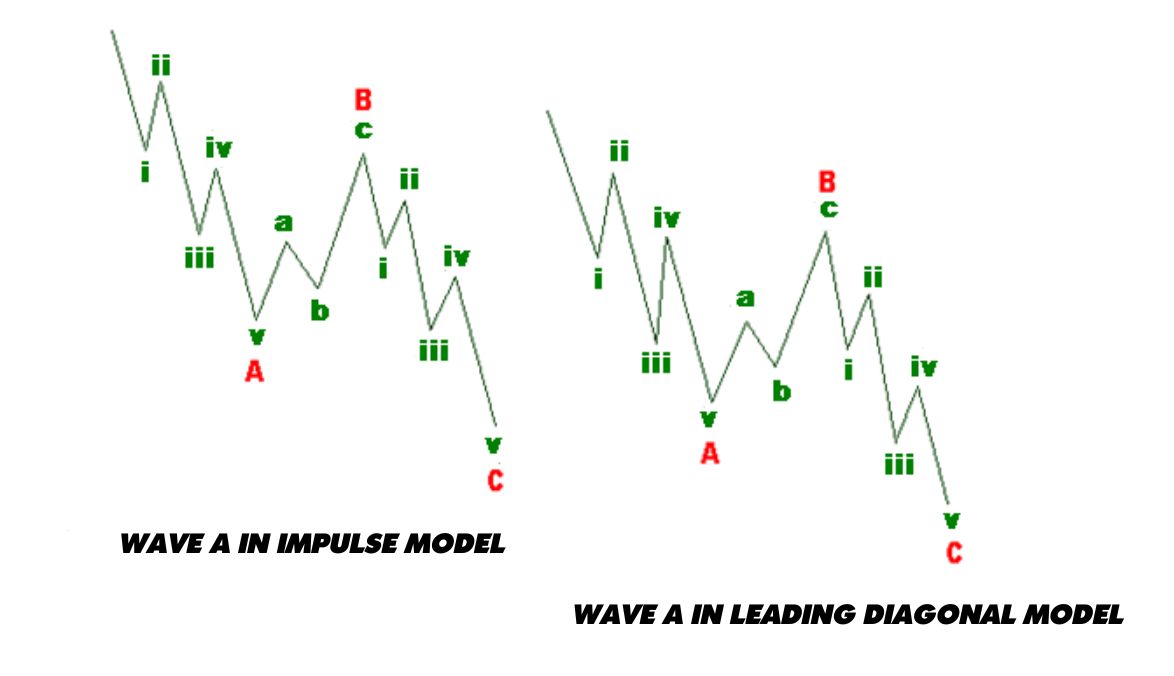
Wave A must follow the model of Impulse (IM) or Leading Diagonal (LD).
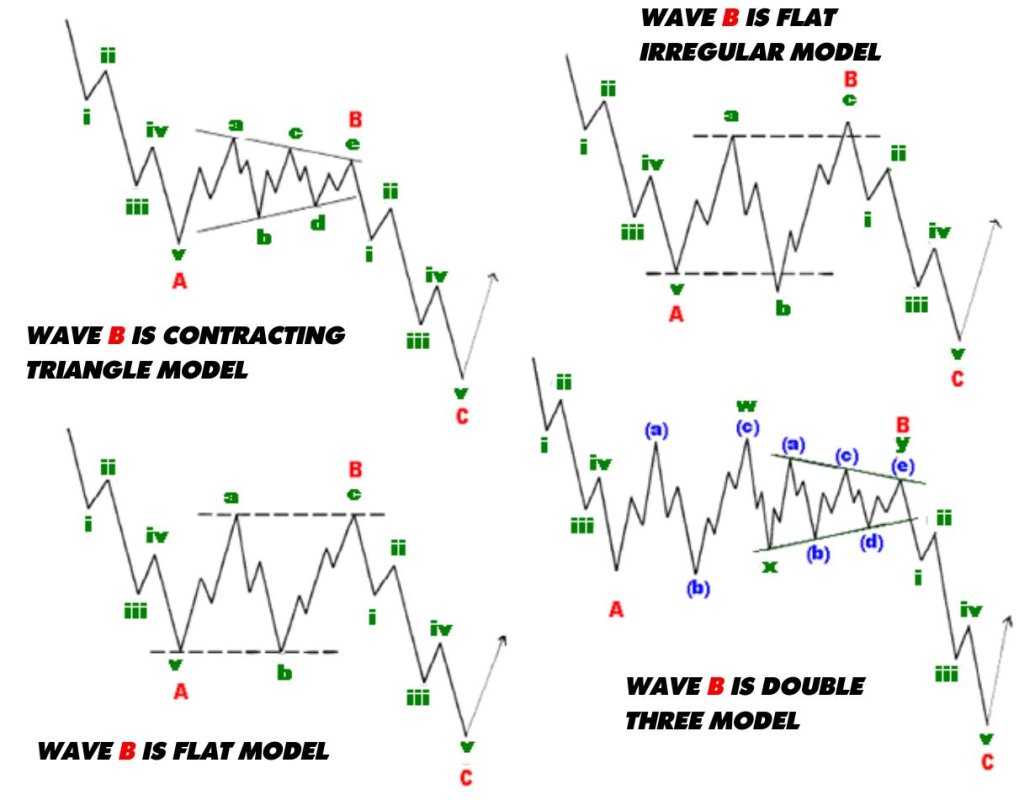
Wave B is only the model of corrective wave and must be shorter than wave A in terms of price distance.
Wave C must be in Impulse (IM) or Ending Diagonal (ED) wave model.
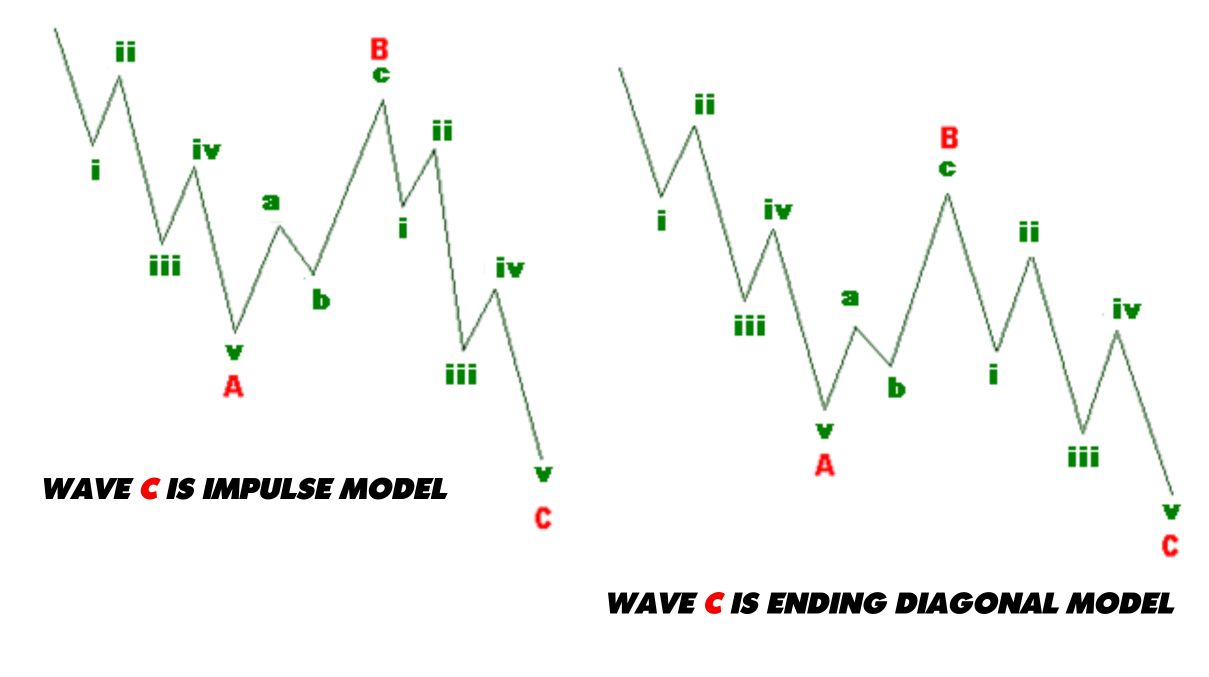
Wave C can be the model of Ending Diagonal (ED) if wave A is the Leading Diagonal wave.

Variations of Zigzag wave
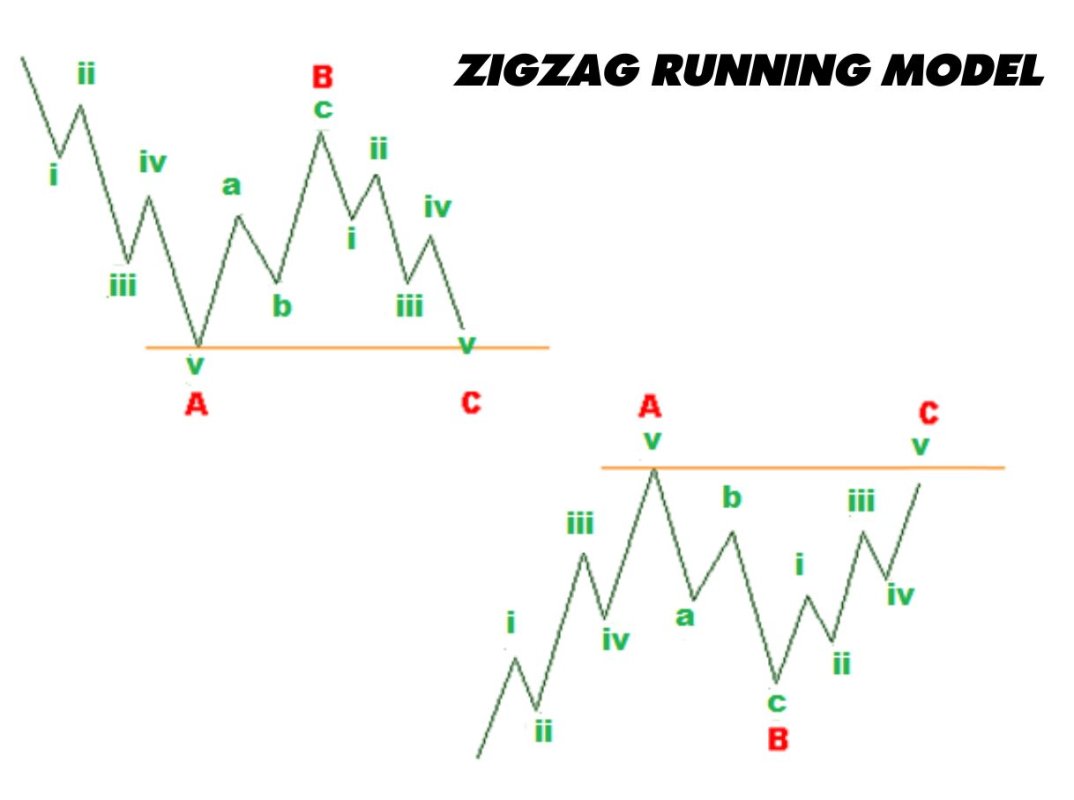
Model of Zigzag Running
In Zigzag Running, the ending point of wave C cannot pass through the ending point of wave A
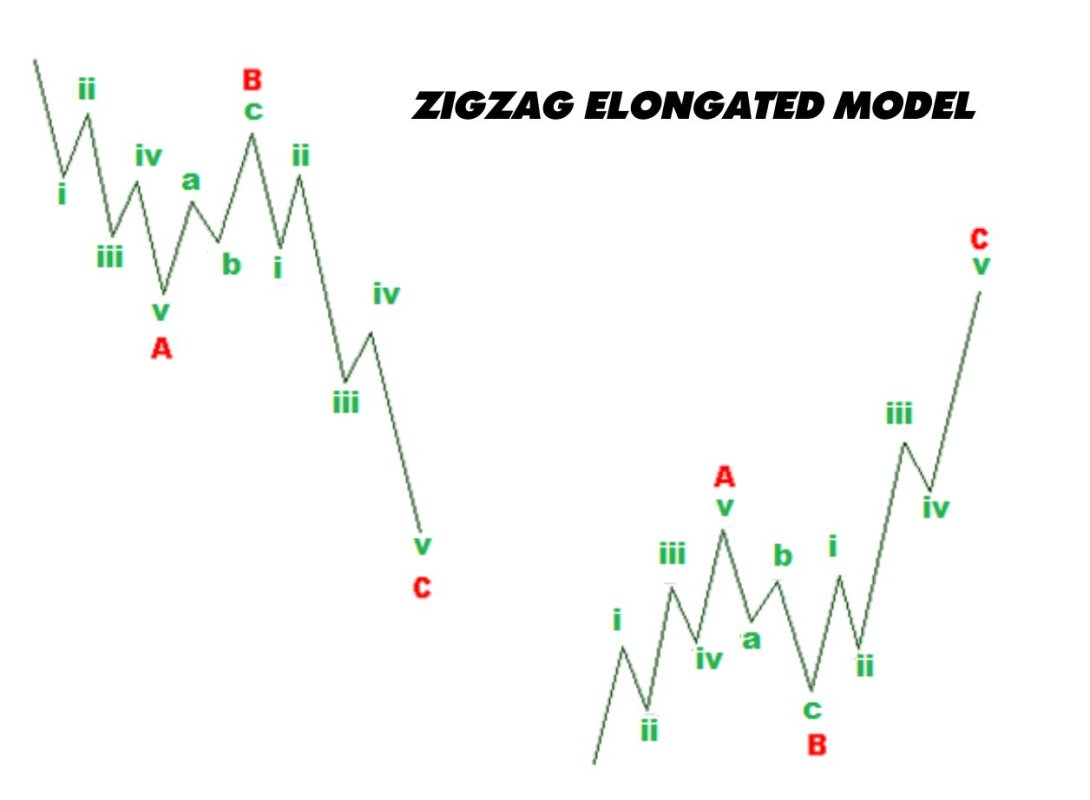
Model of Zigzag Elongated
In the Zigzag Elongated pattern, Wave C is significantly longer than Wave A, and it can even be as long as 2.618 times the length of Wave A.
Model of Double Zigzag and Triple Zigzag
Common variations of the Zigzag (ZZ) pattern include the Double Zigzag (DZ) and Triple Zigzag (TZ) patterns.
Essentially, all of these patterns are corrective wave structures. The occurrence of the Triple Zigzag (TZ) pattern is quite rare. All these patterns collectively form the Zigzag (ZZ) family.
Double Zigzag model
The Double Zigzag (DZ) pattern is formed by combining two Zigzag (ZZ) patterns linked together by a relatively short corrective pattern known as Wave (X).
The Double Zigzag (DZ) pattern is represented by waves (W)-(X)-(Y), where waves (W) and (Y) follow the Zigzag (ZZ) pattern.

Triple Zigzag model
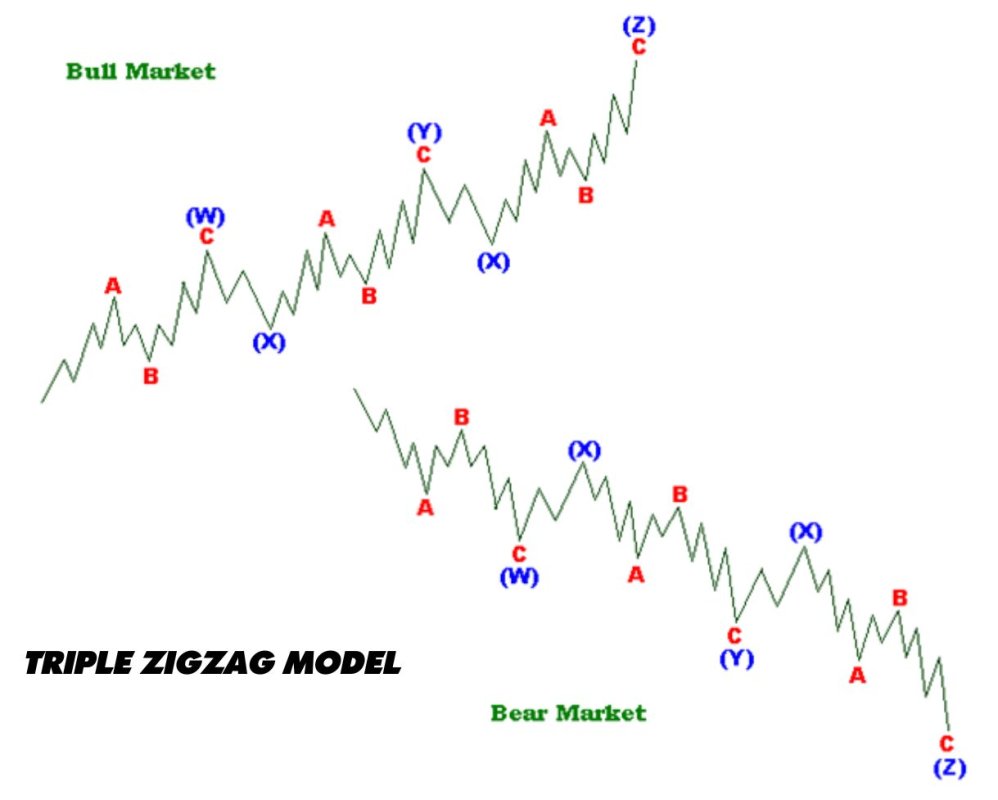
The Triple Zigzag (TZ) pattern is formed by connecting three Zigzag (ZZ) patterns together with two relatively short corrective waves known as Waves (X).
The Triple Zigzag (TZ) pattern is represented by waves (W)-(X)-(Y)-(X)-(Z), where waves (W), (Y), and (Z) follow the Zigzag (ZZ) pattern.
Principles of Double Zigzag and Triple Zigzag
- The waves (W), (Y), and (Z) must follow the Zigzag (ZZ) pattern.
- Wave (X) can be any corrective pattern except for the Expanding Triangle (ET).
- Wave (X) must have a smaller price range than wave (W).
- Wave (Y) must be equal to or longer than wave (X) in terms of price range.
- The second wave (X) must have a smaller price range than wave (Y).
- Wave (Z) must be equal to or longer than the second wave (X) in terms of price range.

Note: The Double Zigzag (DZ) and Triple Zigzag (TZ) wave patterns contain Zigzag (ZZ) patterns, which means that variations of Zigzag patterns like Running Zigzag (ZZ) and Elongated Zigzag (ZZ) are also encompassed within these wave patterns.
| You have just read the article: Corrective Wave – Zigzag Next, I will share with you about: Corrective Wave – Flat For reviewing the last part: Diagonal Wave |


