




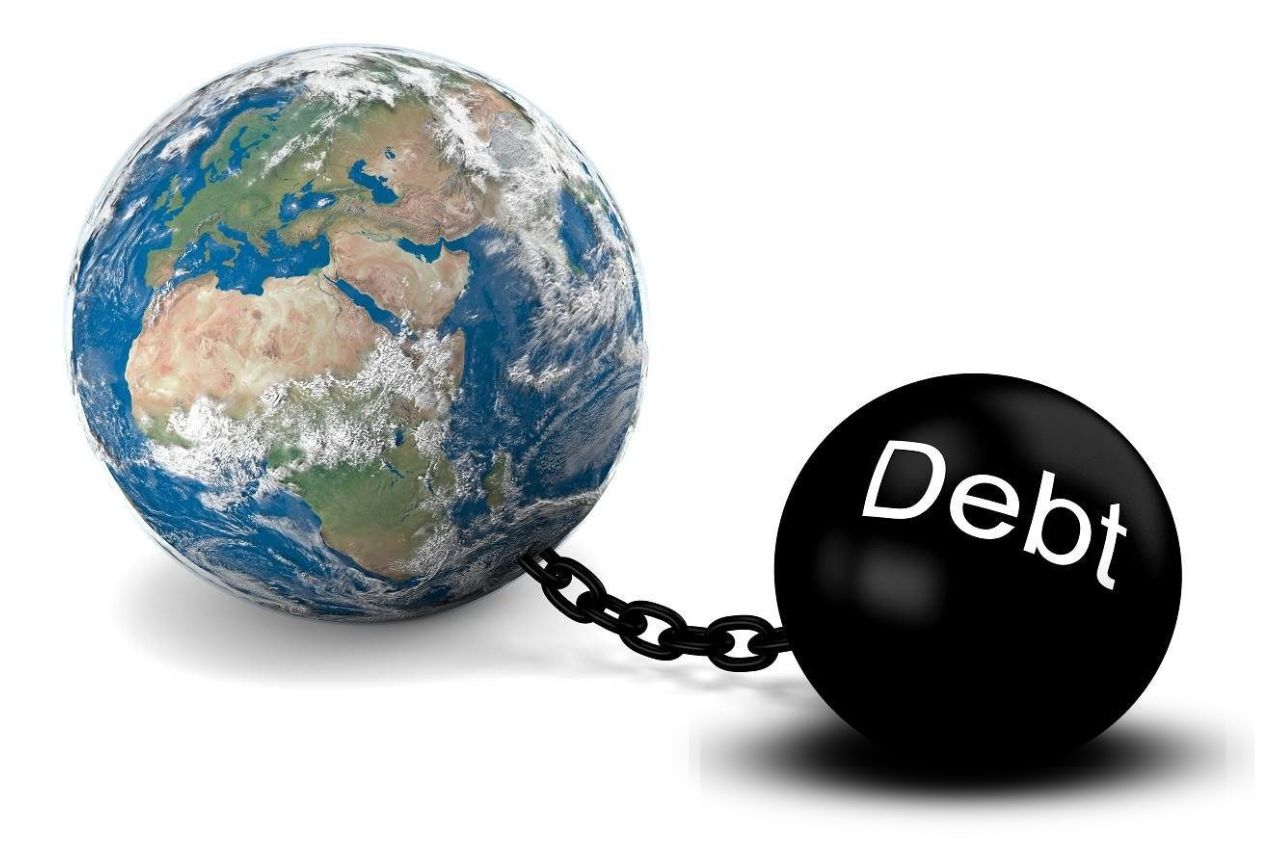
Investors are cautioning governments across the globe regarding the increasing lack of oversight over the level of public debt, suggesting that widespread borrowing ahead of elections might elicit a robust response from the bond market.
Government debt issuance in the United States and the United Kingdom is expected to rise to its highest levels this year, excluding the initial phases of the Covid-19 pandemic. Even though emerging markets are projected to issue bonds robustly, their public debt as a percentage of gross domestic product (GDP) reached a record 68.2% last year, as per data from the Institute of International Finance (IIF).
Budget deficits are spiraling out of control, and the fundamental issue lies in the absence of a mechanism to rein in these deficits, according to Jim Cielinski, the Global Head of Fixed Income at Janus Henderson, as reported by the Financial Times. He further emphasized that this concern is likely to become a major focal point for the markets in the coming 6-12 months.
INVESTORS RECONSIDER GOVERNMENT BONDS
Apollo Global Management estimates that the U.S. Treasury will issue approximately $4 trillion in bonds this year, spanning maturities from 2 to 30 years. This represents an increase from $3 trillion in the previous year and $2.3 trillion in 2018.
The net bond issuance by the U.S. Treasury—factoring in bonds purchased by the Federal Reserve and maturing bonds—is projected to reach $1.6 trillion in the 12-month period ending September 2024, according to RBC Capital Markets. This marks the second-highest level in history. RBC anticipates that the net bond issuance by the U.S. Treasury in 2024-2025 will surpass pre-pandemic levels.
Fund managers are expressing concerns about the escalating government debt levels
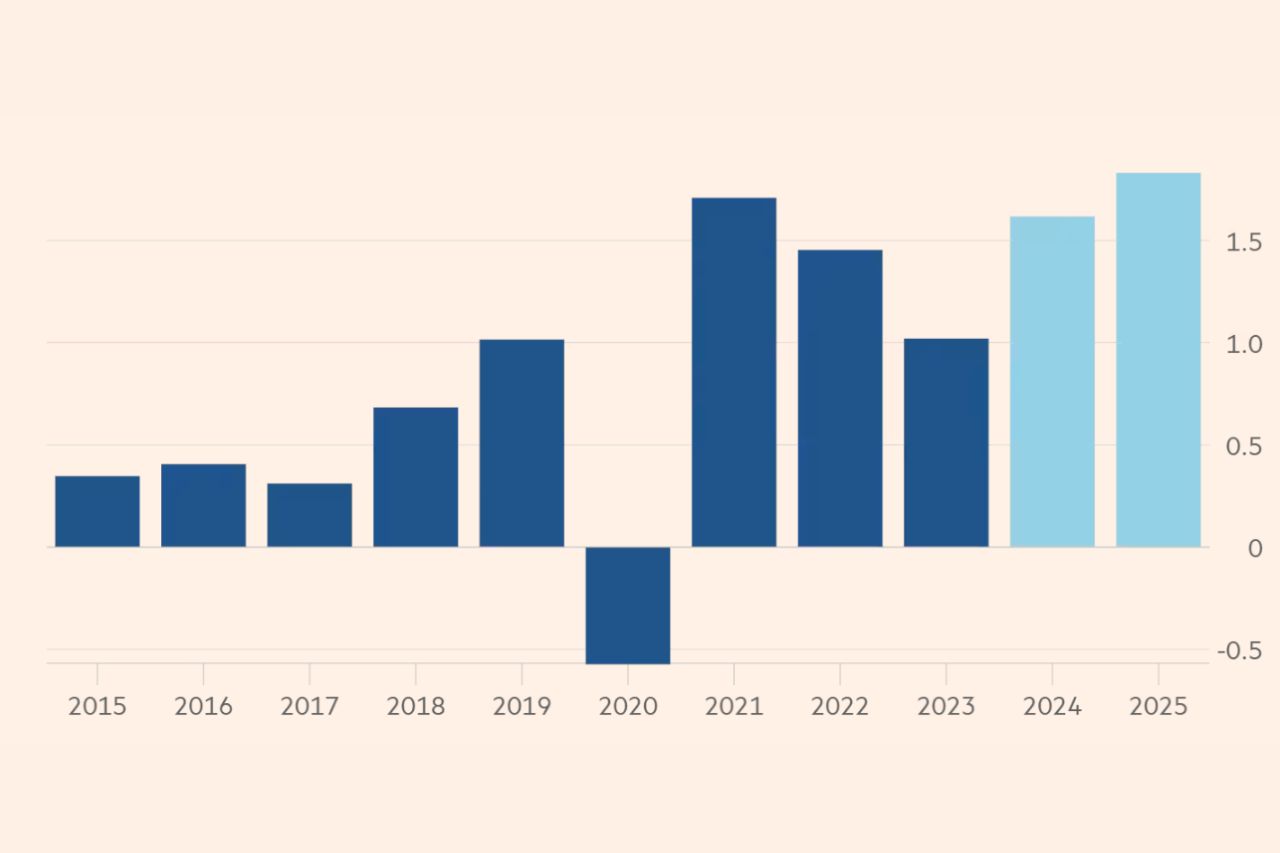
Suggesting that the widespread borrowing activity ahead of elections could trigger strong market reactions instead of focusing on future interest rate directions, as typically observed.
“We are truly in an environment where government debt is increasing uncontrollably, compared to centuries past. Anyone can easily buy government bonds now, whether in the U.S. or Italy. But there have been some recent signs indicating that investors and credit rating agencies are beginning to rethink this”, noted Robert Tipp, the Global Head of Fixed Income at PGIM Fixed Income.
The United Kingdom, gearing up for elections this year, is expected to witness its second-highest year of public debt issuance, following only the year 2020 when the Bank of England (BOE) aggressively acquired bonds to inject money into the economy during the initial pandemic stages. Net issuance, factoring in BOE purchases and sales, is anticipated to be three times the annual average for the past decade.
Keir Starmer, the leader of the Labour Party leading significantly in UK polls, has scaled back promises to borrow £28 billion annually to support the party’s “green prosperity plan” amid growing concerns about mounting public debt.
In an interview with the Financial Times last week, Robert Stheeman, head of the UK Debt Management Office, warned that “in a world where governments have debt to sell, policy planners cannot ignore market realities”.
In Europe, the ten largest economies in the eurozone are projected to issue approximately €1.2 trillion in public debt this year, equivalent to last year’s level, according to estimates from NatWest bank. However, the bank predicts that the net issuance of these countries will increase by 18% compared to last year, reaching €640 billion.
ELECTIONS, MOTIVATION TO BORROW MORE
Growing concerns about increasing public debt come as 2024 is an election year in many countries. Elections serve as a motivation for political leaders to borrow more to increase spending and attract voter support. With the U.S. presidential election set for November 5, 2024, there is no sign of a willingness to curb borrowing among potential candidates.
“Looking at the top two leading candidates, it seems that the situation will not change even after the election. They will continue high levels of spending. This will eventually lead to problems for the United States”, said David Zahn, the Head of European Fixed Income at Franklin Templeton, referring to President Joe Biden and former President Donald Trump, who may directly confront Biden in the upcoming election.
The U.S. budget deficit as a percentage of GDP is forecasted to range from 6.5% to 8% of GDP over the next four years, according to the International Monetary Fund (IMF). This ratio sharply rises from 4% in 2022.
The interest payments on U.S. public debt are expected to increase from below 3% of GDP in 2022 to 4.5% of GDP in 2028.
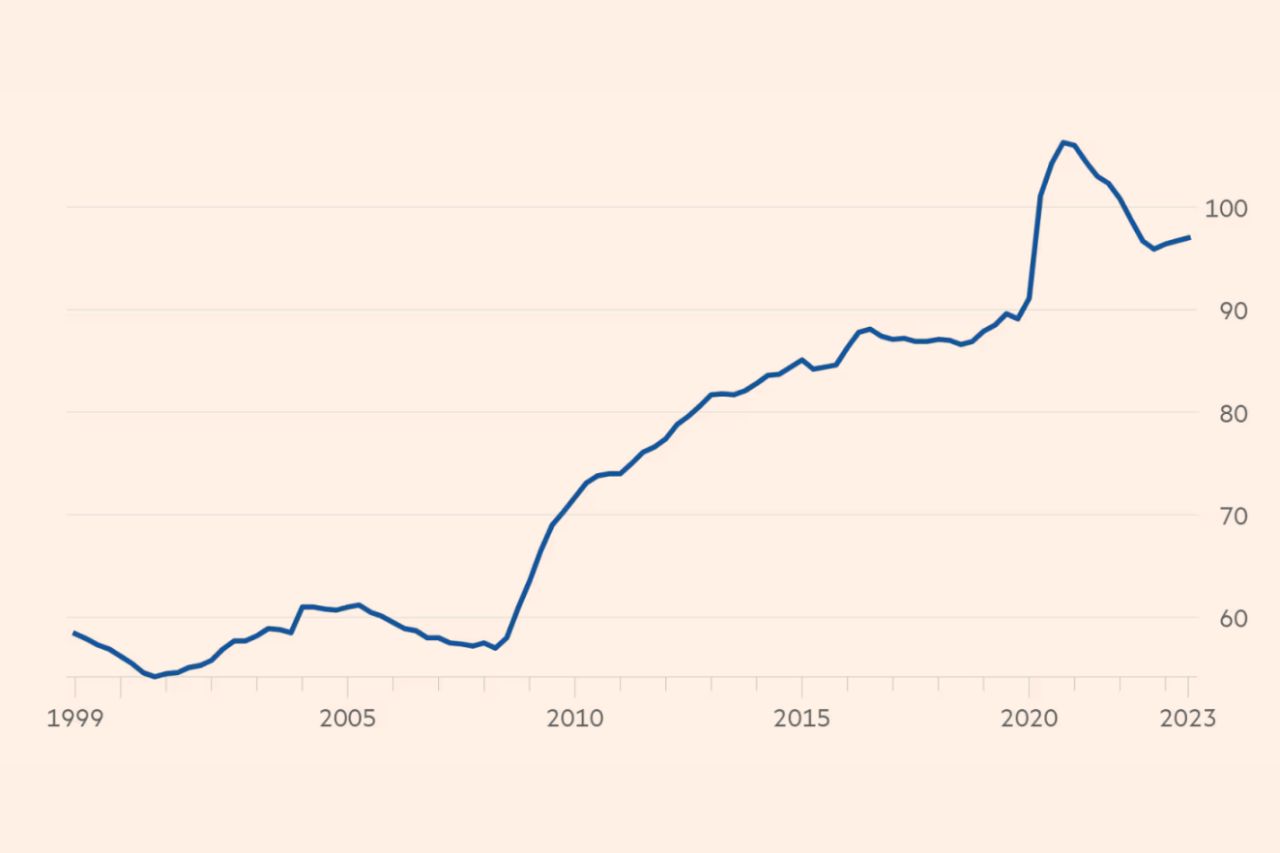
IIF has issued a cautionary note, expressing concerns about a succession of elections and prolonged political turmoil in emerging economies, particularly highlighting worries regarding heightened government borrowing and relaxed fiscal discipline in countries such as India, South Africa, Pakistan, and the United States.
“If upcoming elections lead to populist policies aimed at controlling social tensions, the consequence could be governments borrowing more and exercising less fiscal restraint,” IIF observes, suggesting that a sudden increase in public spending during this global election cycle “may exacerbate the burden of debt for many governments, already at elevated levels.”
According to Financial Times.
By. Pham Thanh Bien
You might enjoy:


