





Why Change Needs a Formula
To answer the question “Why does change need a formula?” I want you to answer the question “Why do you need to change?” first.
Everything has a reason, and when we understand the origin, we can fully control it according to our will.
And the formula for change is just like that. To change ourselves, to change old bad habits, you also need something to impact and motivate your change.
Because no one will change when they are content with their current state. People seek something, so they turn to methods to attain it. Sometimes they find an easy way, and sometimes they don’t.
But it’s certain that changing oneself isn’t easy for everyone! However, once they achieve results for the first time, it leaves a milestone and paves the way for subsequent attempts.
The Components in the Formula for Change
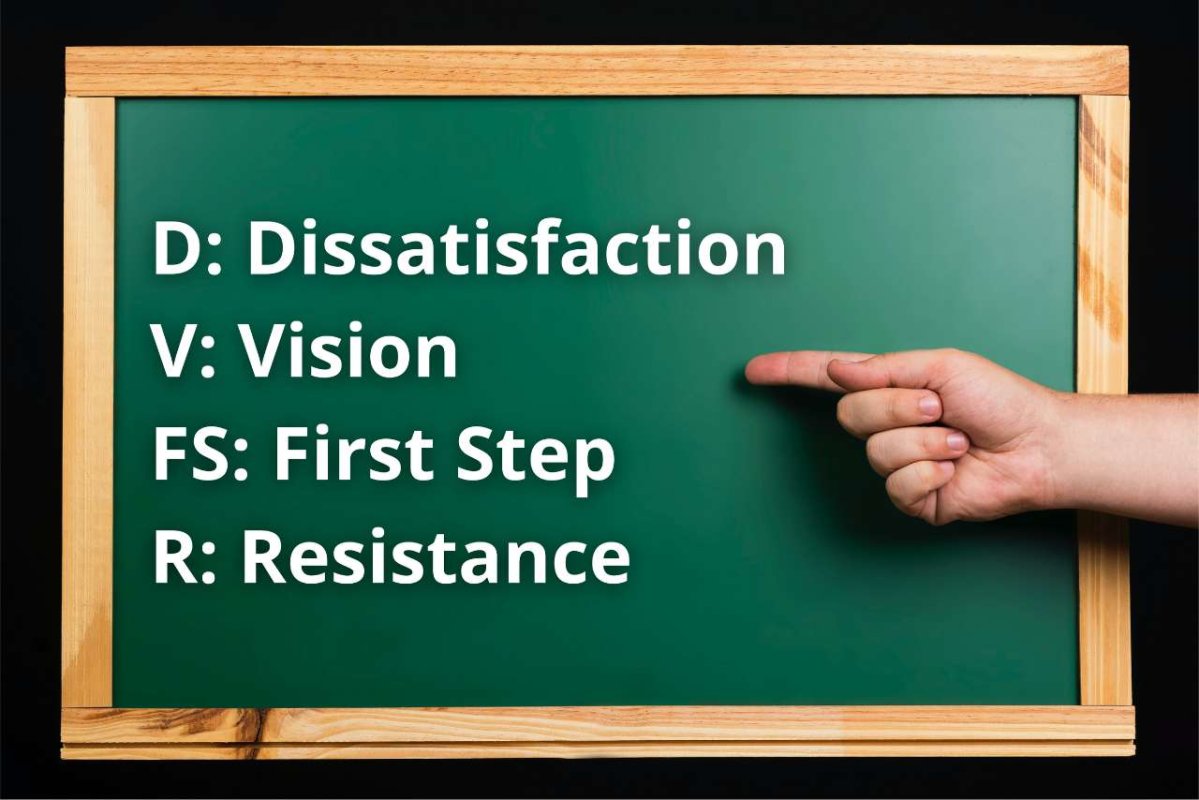
To understand this method better, let’s define “D x V x FS > R” first. Each factor in this formula is equally important, and if any factor is 0, the other efforts will be in vain.
Sufficient Dissatisfaction (D)
In the journey of life, dissatisfaction is often considered a powerful agent of change. From individuals to organizations, significant changes can stem from substantial dissatisfaction.
When faced with dissatisfaction, humans typically have two options: accept the current situation or turn the dissatisfaction into a starting point for change. The pressures come from discontent, lack, or even pain.
Dissatisfaction can shape patience and resilience. When facing challenges, people must possess strong determination to overcome. Dissatisfaction becomes the driving force, helping them never give up and always strive to change and improve.
From dissatisfaction, people develop courage and confidence. They have endured difficulties and know they can overcome them. This leads to material change and promotes positive mental and psychological development.
Expansive Vision (V)
When individuals become aware of their pain, they start seeking ways to overcome that pain. This requires a vision that reaches far, because the pain is intense enough that mere temporary or short-term measures cannot solve it.
A far-reaching vision helps us realize our unlimited potential. It sets higher goals, creates a desire to reach further, and explores possibilities we never imagined. A far-reaching vision is a source of inspiration to explore new paths, challenge ourselves, and test new limits.
When we know there’s a future we want to achieve, we become focused and have a reason to act every day. A far-reaching vision creates a roadmap to our goals, helping us navigate the path of development without losing our way.
The Importance of the First Step (FS)
With desire, plans, and goals to conquer, change requires action. We must always act for what we desire. If you simply feel the pain and want to change it, and you say things like, “I’ll do it tomorrow”, then that pain will permanently cling to you.
Taking the first step involves challenging yourself to grow and mature. It builds patience, perseverance, and the determination to move forward. The first step not only helps you overcome initial obstacles but also develops new skills and capabilities.
Initial fears and potential failures often appear when facing the decision to embark on change. But don’t let these emotions hinder you. Taking the first step demands courage to overcome psychological barriers, to erase the limitations we’ve imposed on ourselves.
Resistance to The Zero (R)
Pay attention to this part: no matter what actions you take to change yourself, if your resistance is strong, your results will remain the same.
Resistance here can be understood as refusing the new. In the process of self-improvement and change, you’ll need to learn many things. Sometimes you’ll encounter things that seem “unlike anything else.” Yet, they bring surprising results.
When we resist nothing, we open ourselves to every opportunity. We must be willing to accept the unfamiliar in changes, as that brings satisfaction and a sense of achievement when we perceive development and success in our self-improvement journey.
How to applying the Formula to Life
First, you need a clear awareness of your current situation and the aspects you want to change. This can relate to personal development, career goals, relationships, or any area of life.
Set specific goals that you want to achieve through the change. Break down larger goals into smaller steps for easy access. Identify the execution plan, including how you will proceed and the resources you’ll need.
Accept that change often comes with uncertainty. Prepare yourself to face new situations and the possibility of failure.
To make the change, you must take the first actions outlined in your plan. It will be tough, and it will be challenging. But don’t step back because of that. Think of the beauty awaiting you after that journey of hardship.
Remember, change isn’t always easy; it’s an essential part of personal development and life. Make your resistance zero, don’t let it overshadow your desire to change yourself. Embrace new opportunities, learn from every experience, and persistently pursue your goals.


