




What is investment psychology?
Investment psychology is a part of financial investment, including the emotions, thoughts, and feelings of investors. These influence their investment decisions and performance. Investment psychology mainly focuses on how investors react to the market, financial news, and price fluctuations.
Psychological factors such as fear, greed, anxiety, and confidence can lead to improper investment behaviors such as buying or selling at the wrong time, or maintaining a position in the market despite signs of risk.
Understanding investment psychology can help investors adjust their approach and develop investment strategies that yield better performance by controlling emotions and making informed decisions.
What have investors “lost”?
When trading in the financial market, investors are often manipulated by the market, which means investors are manipulating themselves!
Why say investors are manipulating themselves? The reason is that if you are here to find a solution to your losses, the reason lies with you, not the market.
Suppose in the investment process, every time you make a profit from a trade, you are indifferent to your profit, and let the profits from many profitable trades accumulate with the capital you have, and continue trading.
At some point, you encounter a trade that doesn’t fit your calculations, you cut losses, but the trade only slightly affects your profit, so it doesn’t matter. Once, twice, and three times. After a few times like that, you break your own rules and checklist – the ones that have created your successful trades.
But as excitement and emotions rise, rationality tends to decline, leading to loss of control.
When reaping consecutive successful campaigns, your capital increases, so does your emotions, pushing your logic down.
You will be tempted to continue buying or selling. You are subjective with technical analysis and capital management. You are prone to making analyses based on emotions rather than following technical convergence. However, the market is not your canvas. The market moves against your emotional calculations. Yet you delude yourself into thinking “I’m just unlucky.”
You are increasing the volume, hoping to “recover” previous losses. But the situation starts to worsen, you do everything undisciplined and drown in chaotic emotions. And some trades with even larger volumes are “activated”. The profits you earned (which you have still kept with the capital) have long been used up, and your capital is negative.
What is the solution?
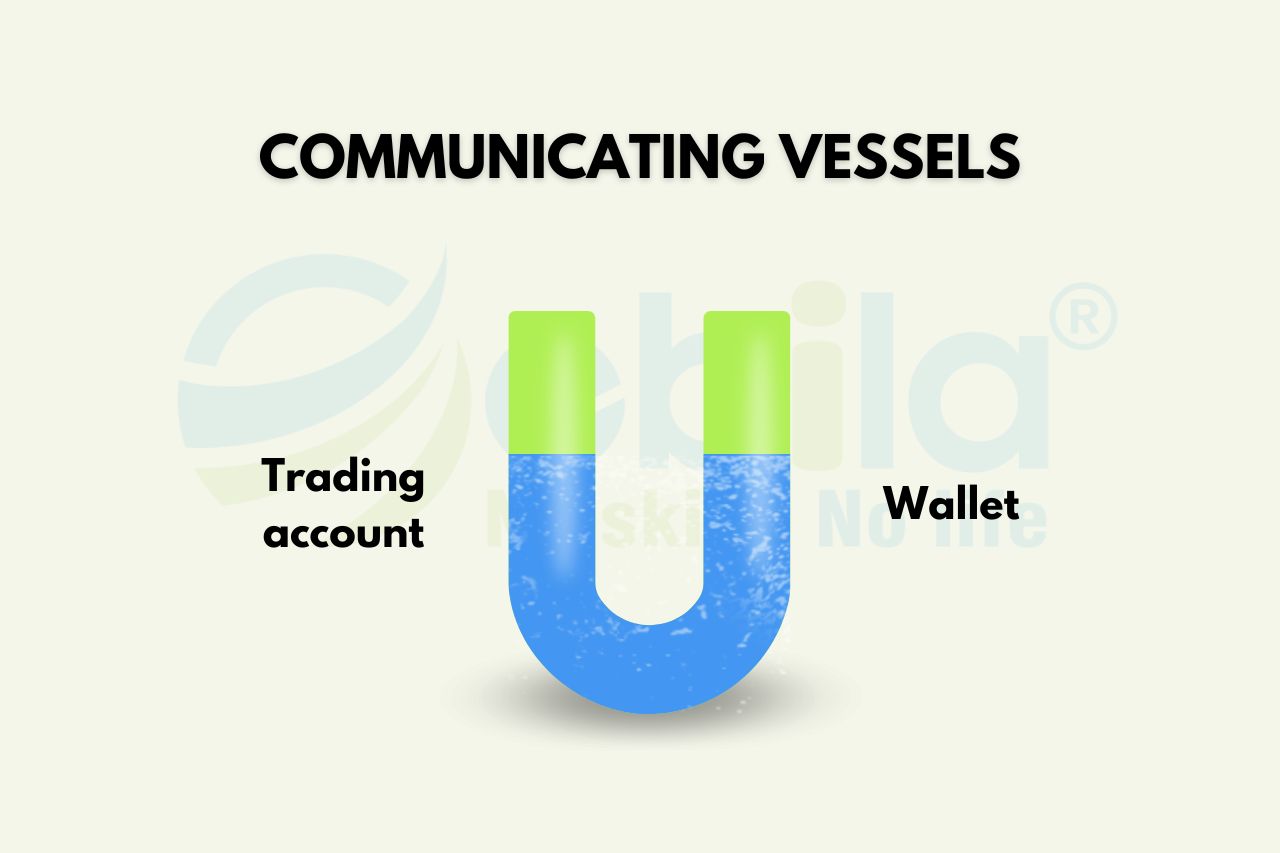
The solution is to balance out. Do it right from the start by withdrawing profits from each trade immediately, so that every campaign you carry out is in the same state as the first trade. Then capital and volume changes will be fixed. This helps keep your psychology vigilant and cautious with your analyses.
To make it easier to understand, usually, balancing will have two balanced sides as shown below.

One side will be the investment account and the other side will be your wallet or bank account. These two sides will be linked and continuously balanced by: Every time there is a trading profit, that profit will be transferred to the wallet.
That way, you will have money every day and manage volume and psychology when trading in volatile markets.
Investment psychology is a complex and difficult-to-control factor. Therefore, investors need to seriously and systematically learn about it. At the same time, risk management methods also need to be strictly adhered to in every investor’s trade.
Hopefully, this article will help you gain more experience and knowledge when trading in the financial market. Wish you successful investment!
You might enjoy:


