




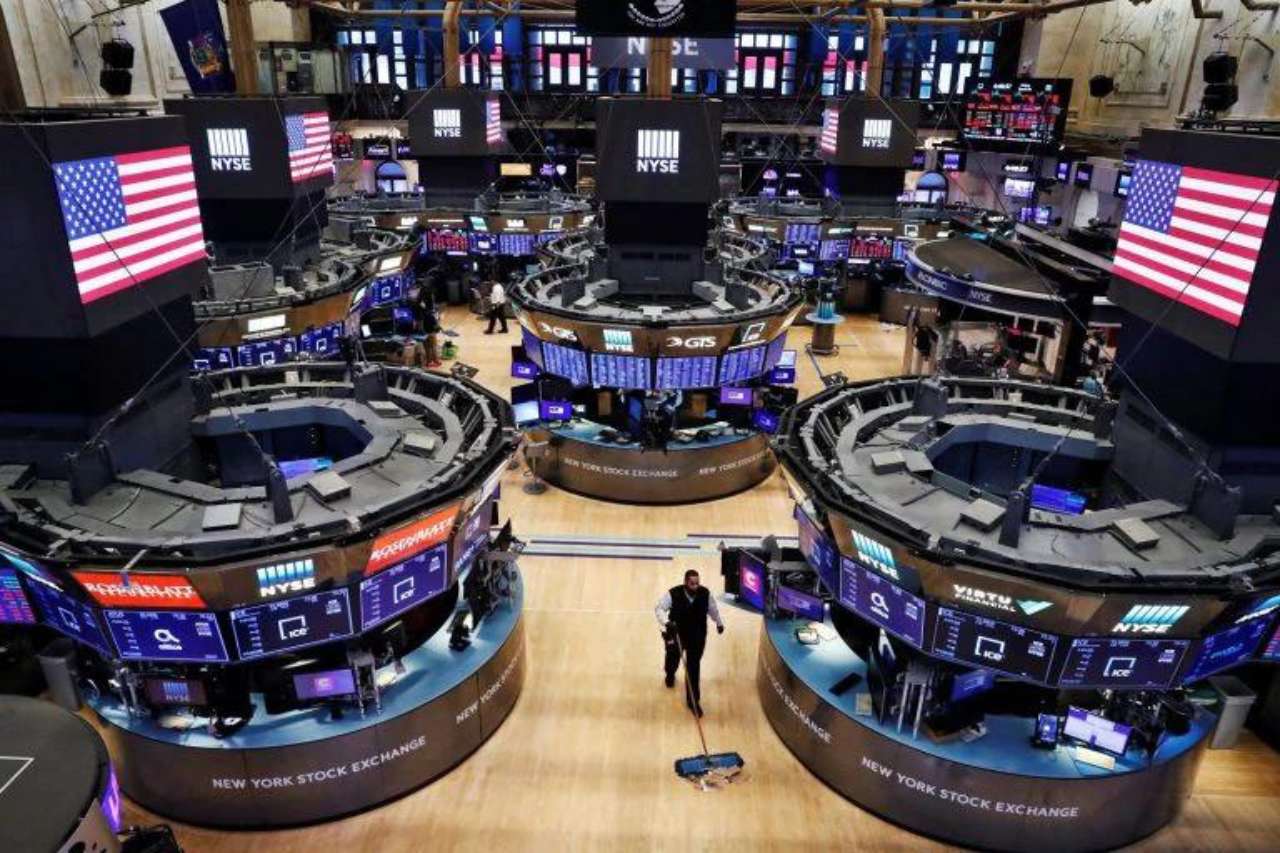
The U.S. stock market saw a significant downturn on Wednesday (3/1) as the anticipation of a potential interest rate cut by the Federal Reserve became uncertain following the release of the latest minutes from the monetary policy meeting. Concurrently, oil prices surged over $2 per barrel due to ongoing attacks by Houthi rebels on cargo ships in the Red Sea.
By the market close, the Nasdaq experienced a 1.18% decline, settling at 14,529.21 points, marking the fourth consecutive session of losses, mainly driven by a downturn in technology stocks.
The S&P 500 index dropped by 0.8% to reach 4,704.81 points, while the Dow Jones index fell by 284.85 points, representing a 0.76% decrease, closing at 37,301.19 points.
The previous Tuesday witnessed the Nasdaq’s most significant drop since October, characterized by a collective sell-off in large-cap technology stocks. Notably, Apple’s stock plummeted by almost 4% after a downgrade in recommendation by Barclays bank. On Wednesday, Apple further declined by 0.8%.
Investors seem to be engaging in profit-taking activities with technology stocks following their recent substantial gains, driven by expectations of an early and substantial rate cut by the Fed in 2024. As uncertainties regarding the Fed’s timing for rate cuts arise, the market’s earlier optimism is waning.
“Looking at the long term, I remain very optimistic. But in the short term, I’m concerned that people are entering the new year with an excessive level of optimism”, stated portfolio manager Steve Eisman from Neuberger Berman in a CNBC interview. Eisman believes that short-term market corrections are a regular occurrence after reaching new highs but maintains a positive outlook for the next 6-12 months.
Selling pressure intensified on Wall Street during the Wednesday afternoon session following the release of the Federal Reserve’s minutes from its regular December monetary policy meeting. The minutes indicated that the U.S. central bank is not fully prepared to implement interest rate cuts.
“Participants in the meeting generally emphasized the importance of maintaining a cautious approach and relying on specific economic data to make monetary policy decisions, while reaffirming that it would be appropriate for monetary policy to maintain a tightened stance for a period until inflation clearly and sustainably meets the target”, as mentioned in the minutes.
During the meeting, Fed officials forecasted three interest rate cuts of 0.25 percentage points each for the current year. However, there remains a considerable level of uncertainty regarding whether these anticipated cuts will come to fruition.
Reflecting diminished expectations of interest rate cuts, the yield on the 10-year U.S. Treasury bond briefly exceeded 4% during Thursday’s session before settling above 3.9% at the close of the trading day.
Strategist Phillip Colmar from MRB Partners suggests that instead of experiencing a soft landing, the U.S. economy might undergo a “no landing” scenario, continuing to exhibit stronger growth compared to trends. This could constrain the Federal Reserve’s ability to implement interest rate cuts.
Colmar stated, “The Fed cutting rates is not a given, even if Powell and his colleagues are determined to do so. Currently, all asset classes, including stocks, are reflecting accommodative monetary conditions”, in discussions with Reuters.
U.S. labor market data indicates a gradual relaxation of tightening conditions. In November, the number of job openings in the U.S. economy declined for the third consecutive month, with a reduction of 62,000 jobs, bringing the total to 879 million jobs, according to a report from the U.S. Department of Labor.
“This report is another indication that the Fed is steering the economy for a soft landing”, stated strategist Ron Temple from Lazard. However, he also mentioned that the Fed might face difficulties in making significant interest rate cuts in 2024 as anticipated by the market, given the potential risk of a resurgence in inflation.
WTI crude oil prices in New York increased by $2.32 per barrel, representing a 3.29% rise, closing at $72.7 per barrel. In London, Brent crude oil prices rose by $2.36 per barrel, a 3.11% increase, reaching $78.25 per barrel.
Houthi rebels, with Iranian support, declared an attack on Wednesday on the Tage container ship belonging to the French shipping company CMA CGM. Conversely, the company released a statement asserting that the vessel did not encounter any incidents.
On Wednesday, Danish shipping company Maersk halted all traffic through the Red Sea until further notice due to continuous Houthi attacks. German company Hapag-Lloyd confirmed its ongoing decision to avoid the Red Sea.
Oil prices have undergone significant fluctuations this week due to developments in the Red Sea and concerns about supply and demand. However, Amrita Sen, the founder of the energy market research company Energy Aspects, suggests that fundamental factors continue to be the primary drivers of oil prices. Sen stated, “We anticipate an increase in oil inventories this year, explaining why the market is not overly responsive to news from the Red Sea.”
The Organization of the Petroleum Exporting Countries (OPEC) and its allies, collectively known as the OPEC+ group, issued a statement on Wednesday expressing unity to “maintain efforts to stabilize the oil market.” Despite this, traders remain skeptical due to perceived internal disagreements within the alliance.
Additionally, worries about an oversupply and a decrease in oil demand are looming over the market as the United States continues to extract oil at a record rate, while China’s oil consumption is on the decline. Last year, both WTI and Brent oil prices saw a decrease of over 10% due to concerns about an oversupplied market.
By. Pham Thanh Bien
You might enjoy:


