





On its sixth consecutive trading day, the US stock market experienced an upward trend despite a significant decline in Tesla shares. This was attributed to encouraging economic growth statistics and a sustained reduction in inflation. The surge in crude oil prices, exceeding 3%, was also influenced by the optimistic outlook for the US economy.
At the close of the market, the S&P 500 index rose by 0.53%, reaching a record high of 4,894.16 points. The Dow Jones index saw an increase of 242.74 points, equivalent to a 0.64% gain, closing at 38,049.13 points. The Nasdaq index showed a 0.18% rise, closing at 15,510.5 points.
Tesla stocks significantly impacted the Nasdaq session, witnessing a 12% decline—the most substantial drop in over a year-following disappointing Q4 2023 financial results and warnings of a potential slowdown in 2024.
Although Nasdaq lagged behind the other two indices in this session, it still achieved remarkable weekly gains, with a 1.3% increase since the week’s start. S&P 500 and Dow Jones recorded respective weekly gains of 1.1% and 0.5%.
As of this session, both S&P 500 and Nasdaq have seen gains for six consecutive sessions, with S&P 500 achieving a record-breaking streak of five consecutive sessions-the longest since November 2021.
A report from the US Department of Commerce revealed a 3.3% growth in the country’s Gross Domestic Product (GDP) for the last quarter, surpassing the expected 2% growth predicted by economic experts in a Dow Jones survey. These results indicate the resilience of the world’s largest economy despite the Federal Reserve’s interest rate hike campaign to combat inflation. The US economy achieved a 2.5% growth for the entire year.
The report also provided positive inflation data, with the core Personal Consumption Expenditures (PCE) index, the Fed’s preferred inflation measure excluding energy and food prices, increasing by 2% in Q4, meeting the Fed’s inflation target. Meanwhile, the overall PCE rose by only 1.7%.
Described as a “Goldilocks” scenario by strategist Kevin Gordon of Charles Schwab, the data suggests robust economic growth with moderate inflation according to an interview with CNBC.
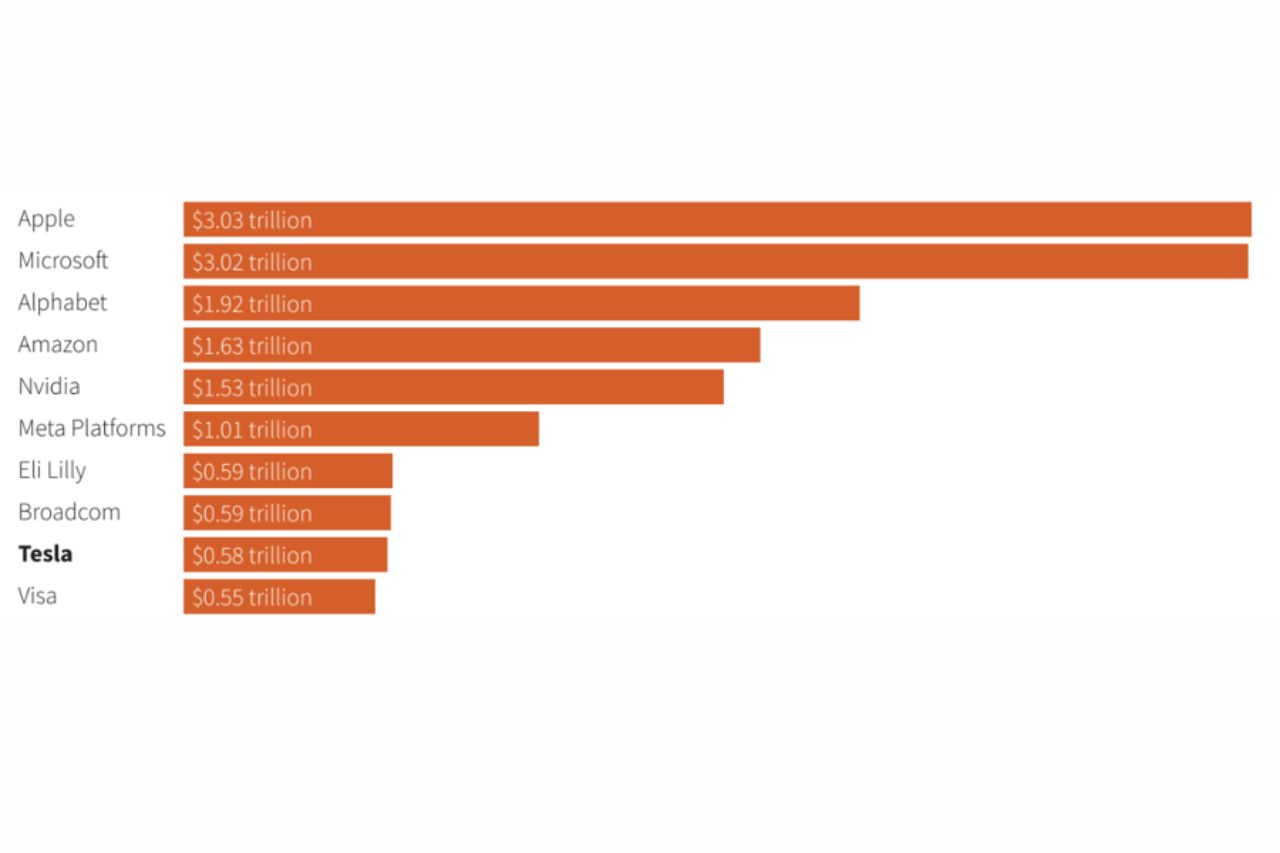
Additionally, the ongoing surge in Artificial Intelligence (AI) remains a driving force behind the upward trajectory of the US stock market. Microsoft’s software stocks rose by 0.6% on Thursday, closing at a record level of $404.9 per share, pushing the market capitalization above the $3 trillion mark. Currently, the US has two companies with a market capitalization exceeding $3 trillion-Apple and Microsoft. Globally, only these two companies have reached such a market capitalization milestone.
The WTI crude oil prices for March delivery in New York saw a $2.27 per barrel increase, marking a 3% rise and closing at $77.36 per barrel. Meanwhile, the Brent crude oil prices for later delivery in London experienced a $2.39 per barrel increase, equivalent to a 2.99% rise, with a closing price of $82.43 per barrel.
After facing more than a 10% decline for each type last year, WTI crude oil prices have now surged by 8% since the beginning of this year, while Brent crude oil prices have climbed by 7%.
According to strategist Matt Maley from Miller Tabak, the WTI oil price surpassing the $76 per barrel threshold indicates a short-term upward trend for oil. Maley suggests that the next significant move for WTI oil prices would occur if it crosses the 200-day moving average of $77.65 per barrel.
On another note, portfolio manager Robert Thummel of Tortoise anticipates that WTI oil prices could reach $85 per barrel if political tensions in the Middle East continue to escalate.
This week, various factors have supported oil prices, including geopolitical risks, positive US GDP data, and the People’s Bank of China’s (PBOC) decision on Wednesday to reduce the reserve requirement ratio (RRR), freeing up approximately $140 billion in liquidity within China’s banking system to stimulate lending.
Maley suggests that despite China’s government not implementing as robust demand-boosting measures as expected, the policies announced by Beijing can at least prevent a weakening trend in energy consumption in the country.
Thummel notes, “The two largest oil-consuming countries in the world will likely exhibit fairly strong demand this year”.
Additionally, weekly data from the US Energy Information Administration (EIA) further supported oil prices. US commercial crude oil inventories decreased by 9.2 million barrels in the week ending January 19, and the country’s crude oil production decreased by 1 million barrels per day, holding steady at 12.3 million barrels per day.
By. Pham Thanh Bien
You might enjoy:
How did the Chinese stock market lose 6 trillion USD in market capitalization in 3 years?


