




As reported by CNBC on January 17th, the Dow Jones Industrial Average experienced a 94-point decline, equivalent to a 0.25% decrease, closing at 37,227 points. This represents the third consecutive session of decline for this index.
The S&P 500 saw a 0.56% drop, concluding the session at 4,739 points.
Meanwhile, the technology-oriented Nasdaq Composite experienced a 0.59% loss, reaching 14,856 points.
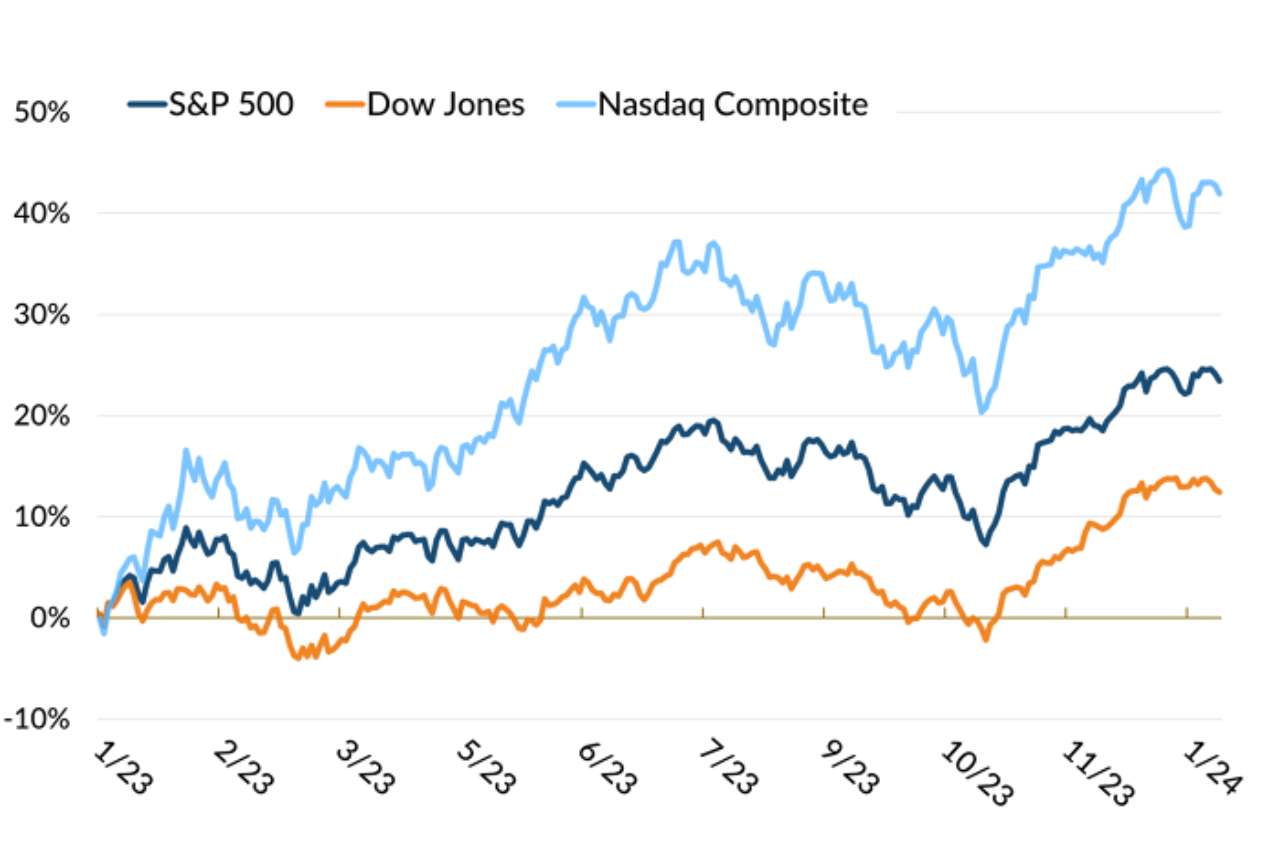
Charles Schwab’s stocks experienced a 1.3% decline following the financial giant’s report of mixed business results. Walgreens and Caterpillar stocks also saw a roughly 3% drop, causing a decrease in the Dow Jones index.
On the flip side, Boeing’s stocks increased by 1.3%, placing them among the top performers in the Dow Jones. Boeing has faced ongoing selling pressure in the wake of the 737 Max 9 airplane incident in recent days.
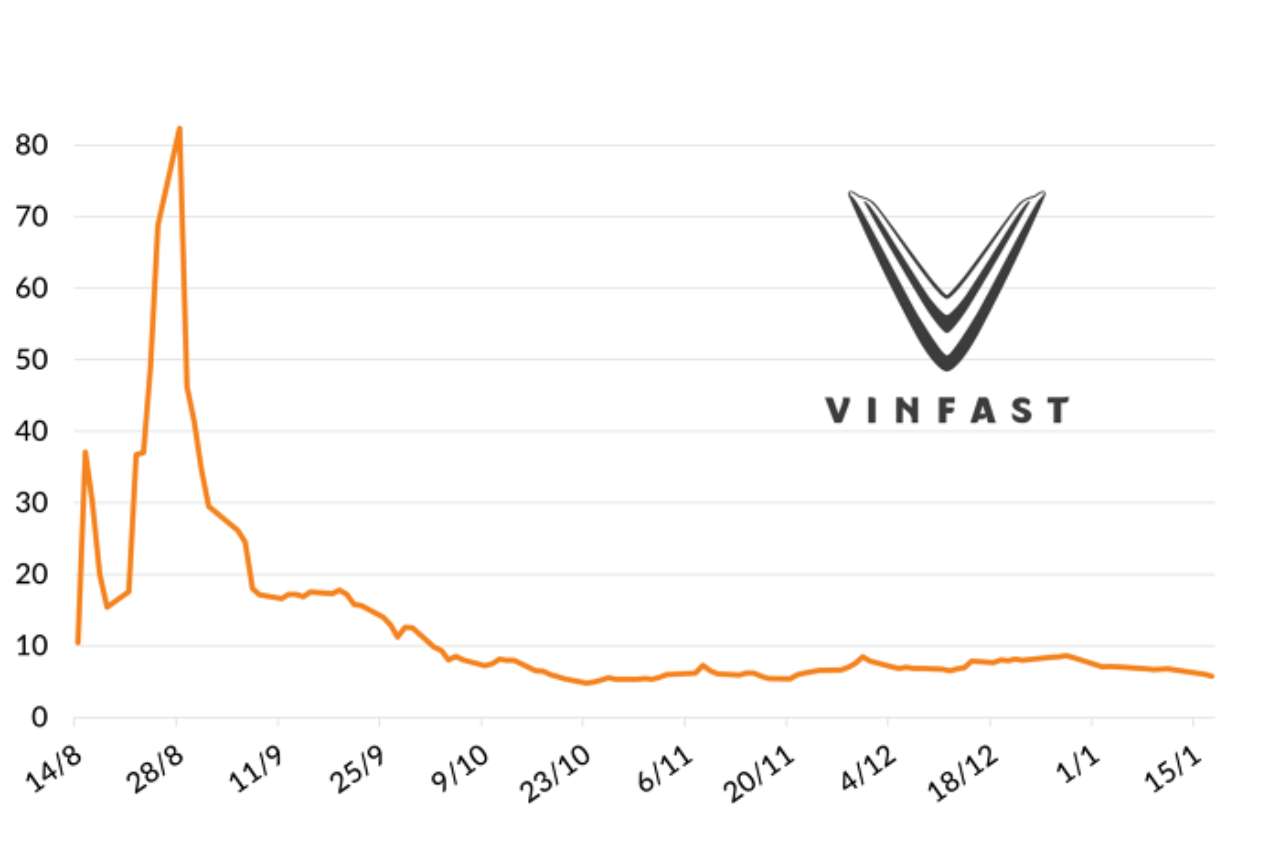
VinFast stocks (VFS) further decreased by 4.31%, settling at $5.77 per share, marking the lowest closing price since November 20, 2023. With these results, VinFast’s market capitalization reached $13.5 billion, falling to the 28th position among the world’s largest automotive companies.
Retail sales for December surpassed predictions, indicating continued consumer resilience. However, this makes it less likely for the Federal Reserve (Fed) to make significant interest rate cuts.
To be more specific, the data reveals a 0.6% increase in retail sales compared to November. Excluding auto sales, the rise would be 0.4%. Economists surveyed by Dow Jones had anticipated a 0.4% increase from the previous month and a 0.2% rise excluding automobiles.
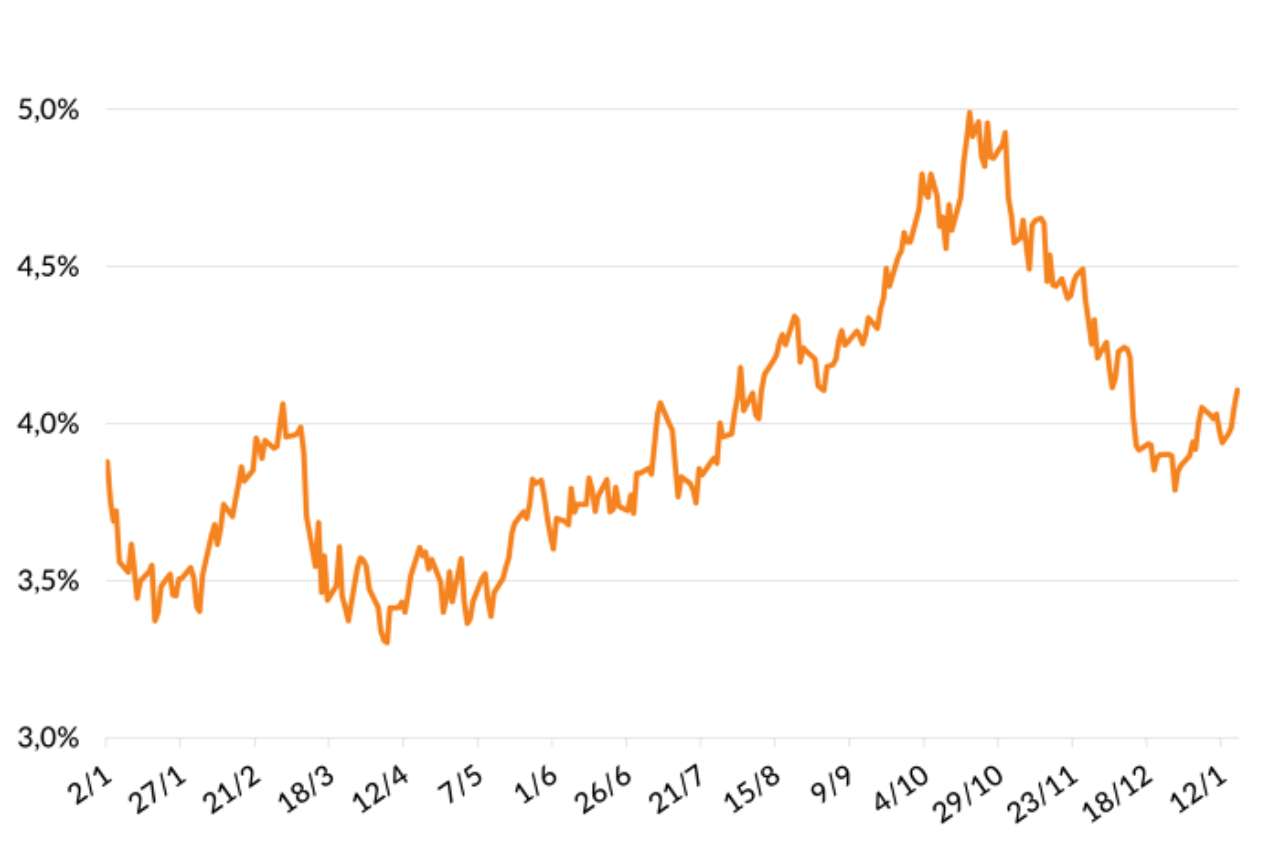
The yield on the 10-year US Treasury bond continued its upward trend, reaching 4.107% by the end of January 17, following a cautionary statement from Federal Reserve Governor Christopher Waller about the potential delay in policy easing.
Presently, there is a 57% likelihood in the futures market that the Federal Reserve (Fed) will initiate a reduction in interest rates in March, as indicated by CME Group’s FedWatch tool. Approximately a month earlier, market expectations had reached as high as 62.7%.
Thomas Martin, a high-level portfolio manager at Globalt Investments, expressed the view that “By the close of this year, it’s possible that interest rates will be lower than their current levels. However, this process won’t follow a straightforward trajectory.”
“Those preparing for the possibility of a sharp interest rate decline and a higher stock market may be becoming a bit more cautious. It would be prudent to hold both bonds and stocks”, Mr. Martin added.

As per the recently published Beige Book by the Federal Reserve (Fed), economic activities have predominantly stagnated over the past seven weeks. Both recruitment and prices have increased at a pace described as “modest to moderate.”
The most recent Beige Book suggests that economic activity remains largely unchanged compared to the report issued on November 29, 2023. When broken down by sectors, the housing market and the demand for mortgage loans are showing signs of decline due to elevated interest rates.
Businesses surveyed also conveyed that inflation has exerted pressure on consumers, resulting in challenges related to purchasing power. These businesses also pointed out that there is a sustained increase in wage pressures.
By. Pham Thanh Bien
You might enjoy:


