




1. What is The Impulse Wave
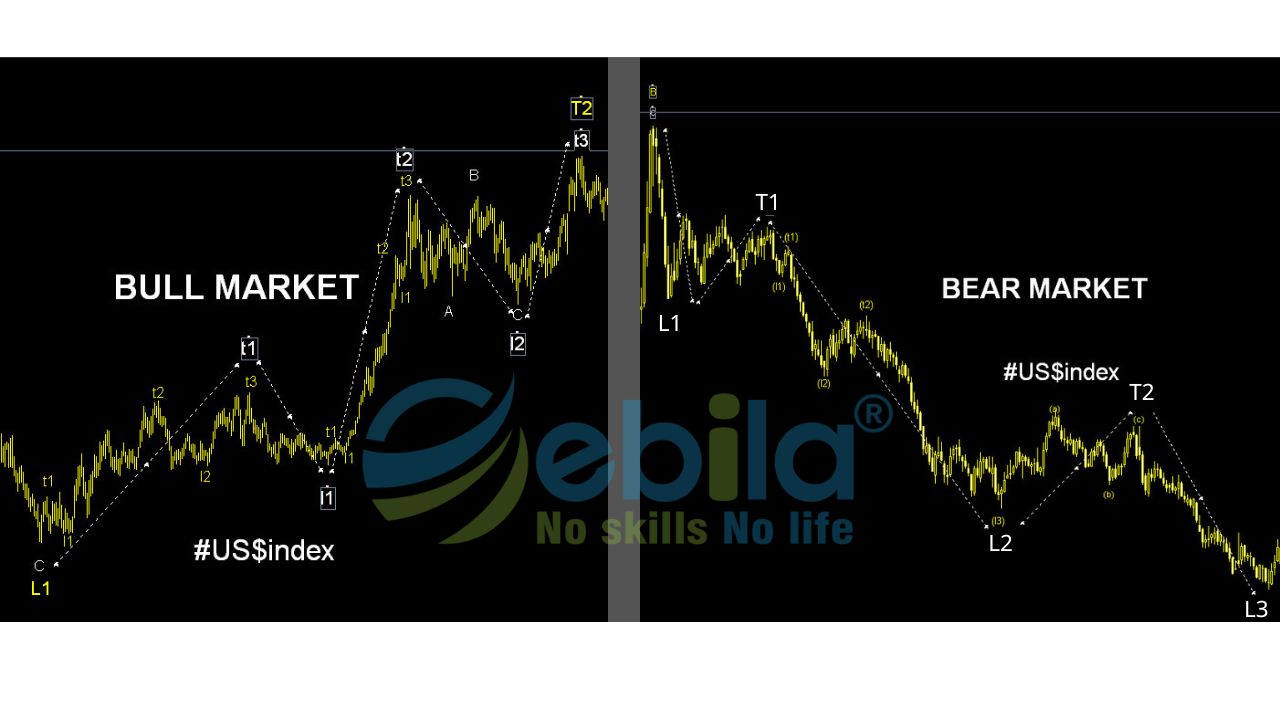
Impulse wave is a series of price movements that follow the current main trend. In an uptrend, impulse waves consist of price surges that reach higher highs, surpassing the previous peaks. Conversely, in a downtrend, impulse waves consist of price declines that reach lower lows, forming lower troughs compared to the previous ones.
Impulse waves are often characterized by the presence of long candlesticks with large bodies (possibly accompanied by significant trading volume). Notably in terms of timing, impulse waves are formed and progress more rapidly than corrective waves.
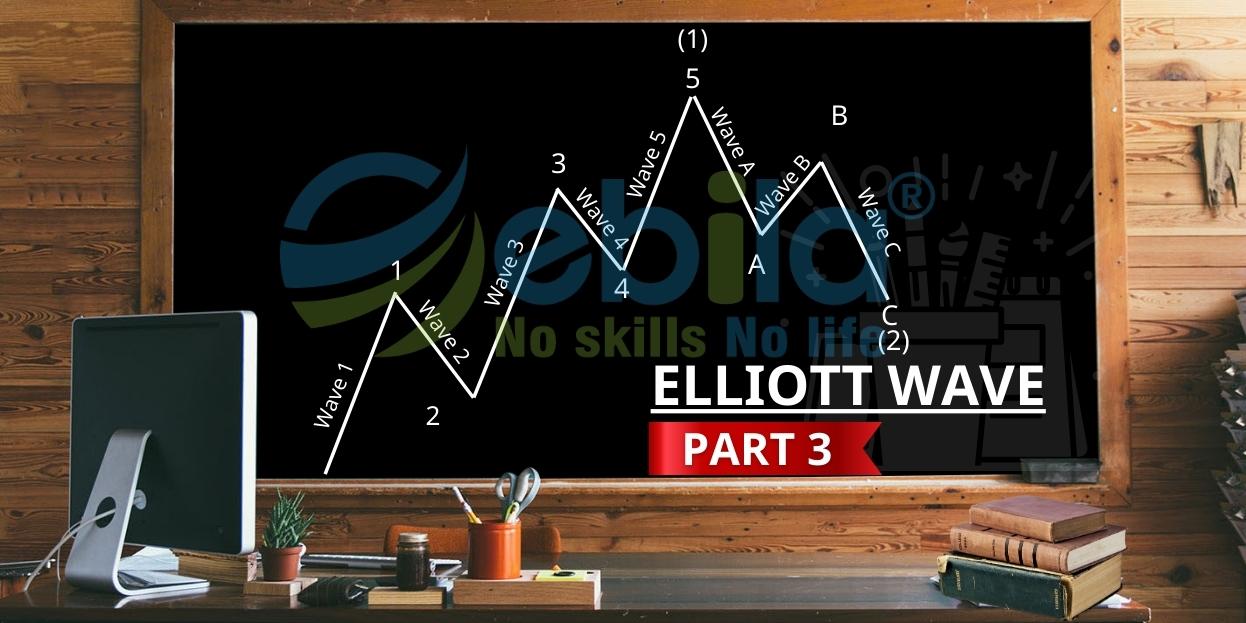
The Impulse Wave pattern (represented as IM) is a fundamental Elliott Wave pattern consisting of 5 waves. Within this pattern, there are 3 waves that move in the direction of the main trend and 2 waves that move in the opposite direction of the main trend. Each wave is marked at its endpoint and numbered from 1 to 5.
2. The Important Principles of Impulse Wave
- Wave 1 must be an Impulse (IM) or Leading Diagonal (LD) pattern.
- Wave 2 can be any corrective pattern except for Contracting Triangle (CT) or Expanding Triangle (ET).
- Wave 2 should not retrace more than 100% of Wave 1.
- Wave 3 must be an Impulse (IM) pattern.
- Wave 3 should be longer than Wave 2 in terms of price movement.
- Wave 4 can be any corrective pattern.
- Waves 2 and 4 should not overlap in price.
- Wave 5 must be an Impulse (IM) or Ending Diagonal (ED) pattern.
- Wave 5 should be at least 70% of the length of Wave 4 in terms of price.
- Among Waves 1, 3, and 5, each wave can expand, making it the longest among the three.
- Wave 5 may not exceed the endpoint of Wave 3, resulting in an irregular situation known as a Failure or Truncated 5th.
3. Variations of Impulse Wave Model
3.1 Impulse Extension wave model
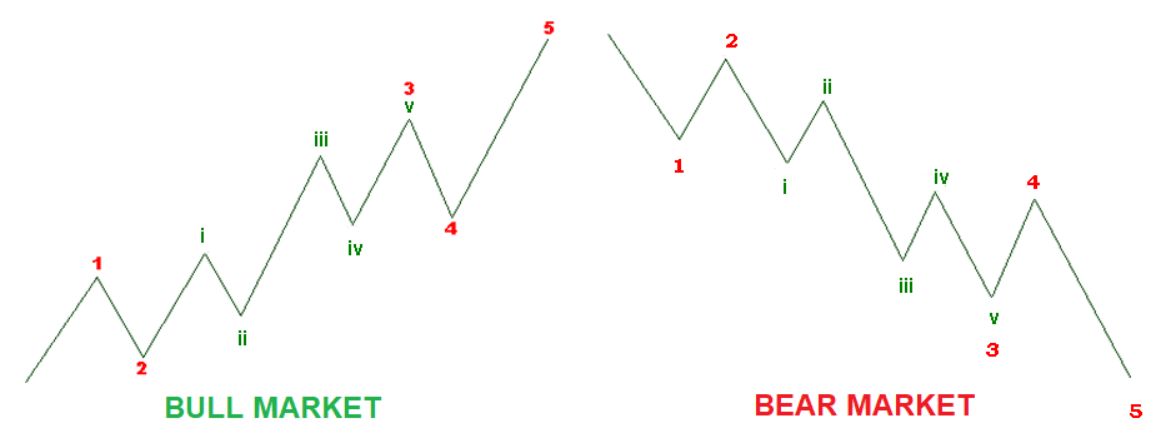
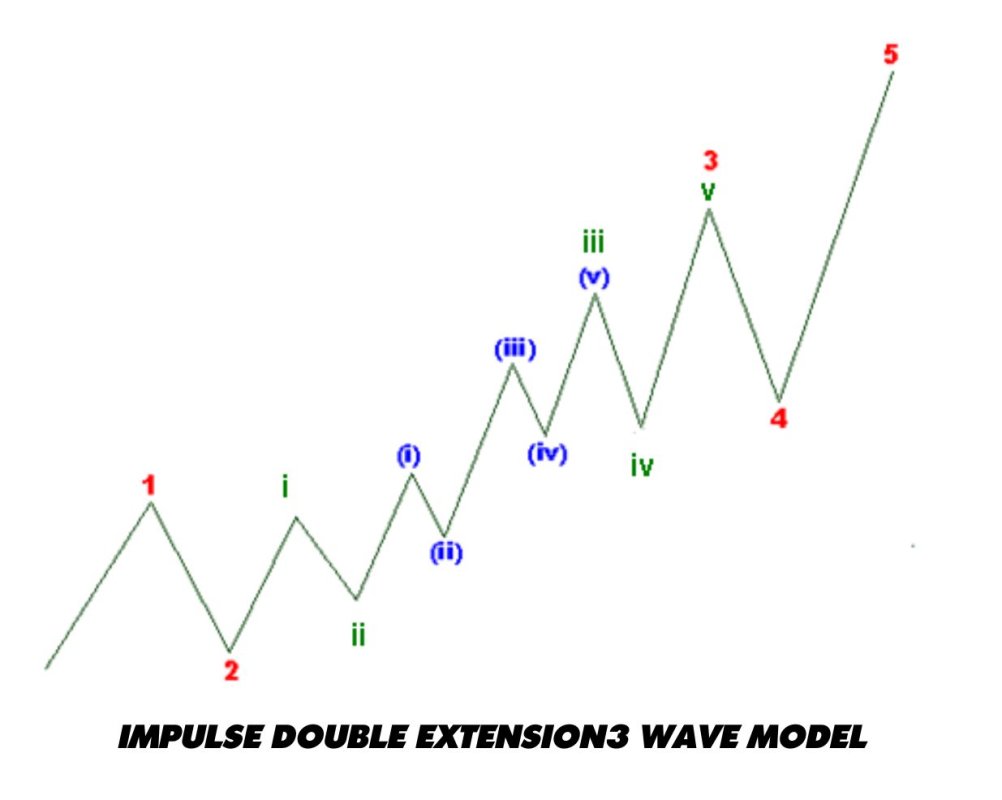
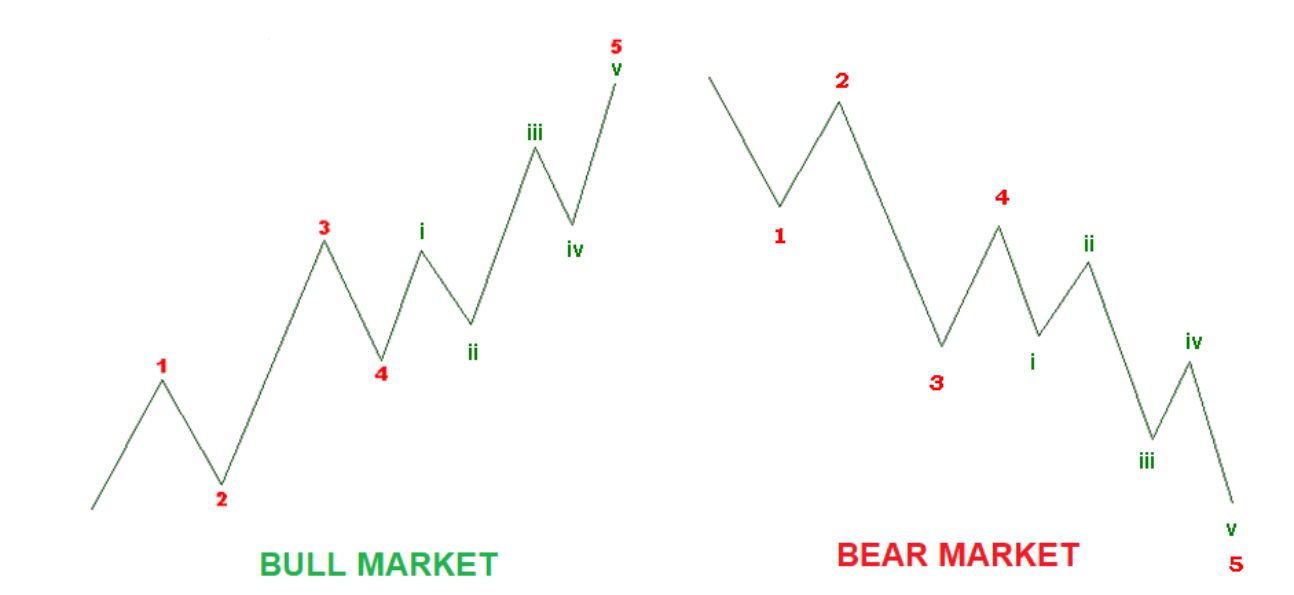
The Impulse Extension wave pattern, also known as an expanding wave pattern, occurs within a primary wave where waves 1, 3, or 5 can extend and elongate beyond the lengths of the other waves. The most common form of extension pattern is when Wave 3 expands, resulting in Waves 1 and 5 having similar lengths. This pattern is called “Extensions 3.” If Wave 1 expands, it’s referred to as “Extension1,” and if Wave 5 expands, it’s termed “Extensions 5.” However, these latter two patterns are less common compared to the Extensions 3 pattern. Notably, the phenomenon of extension waves can also occur within the very extension wave itself.
Appearance:
The Impulse Extension pattern appears in waves 1, 3, and 5, as well as waves A and C within the corrective process.
Internal Wave Structure:
The Impulse Extension pattern consists of a minimum of 9 waves, although variations with 13 or 17 waves can also occur. The minimum internal wave structure of 9 waves follows the pattern 5-3-5-3-5-3-5-3-5. It’s important to note that the 3-wave patterns within this structure are corrective waves comprising 5 waves in a triangular correction pattern.
1. Wave 1 Extension Model
Principles:
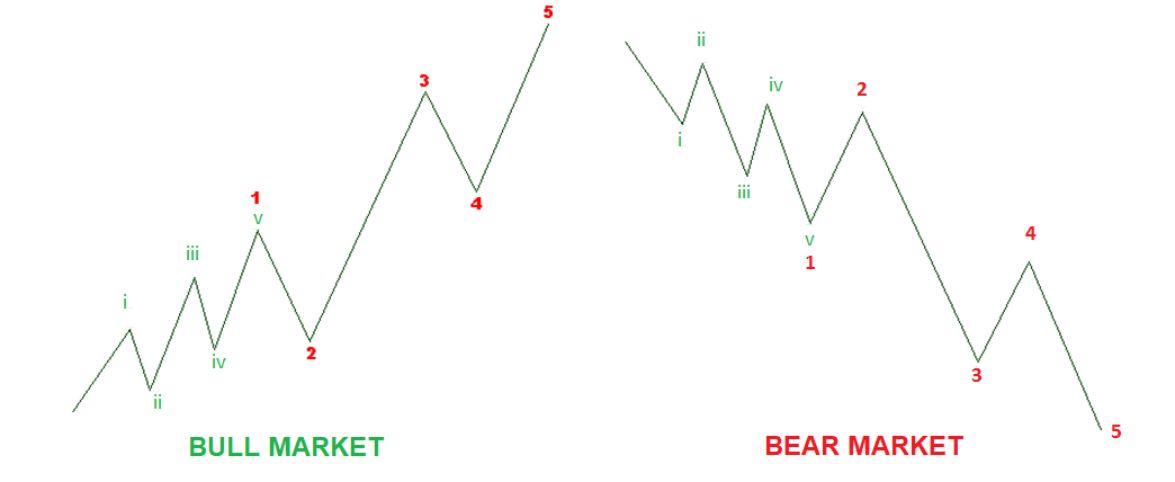
- A nested wave 1 extension comprises 9 waves, each with a similar shape and developmental time frame.
- If an extension occurs in wave 1, waves 3 and 5 will be regular waves without extensions.
- Wave 1 extension follows the Impulse (IM) or Leading Diagonal (LD) pattern.
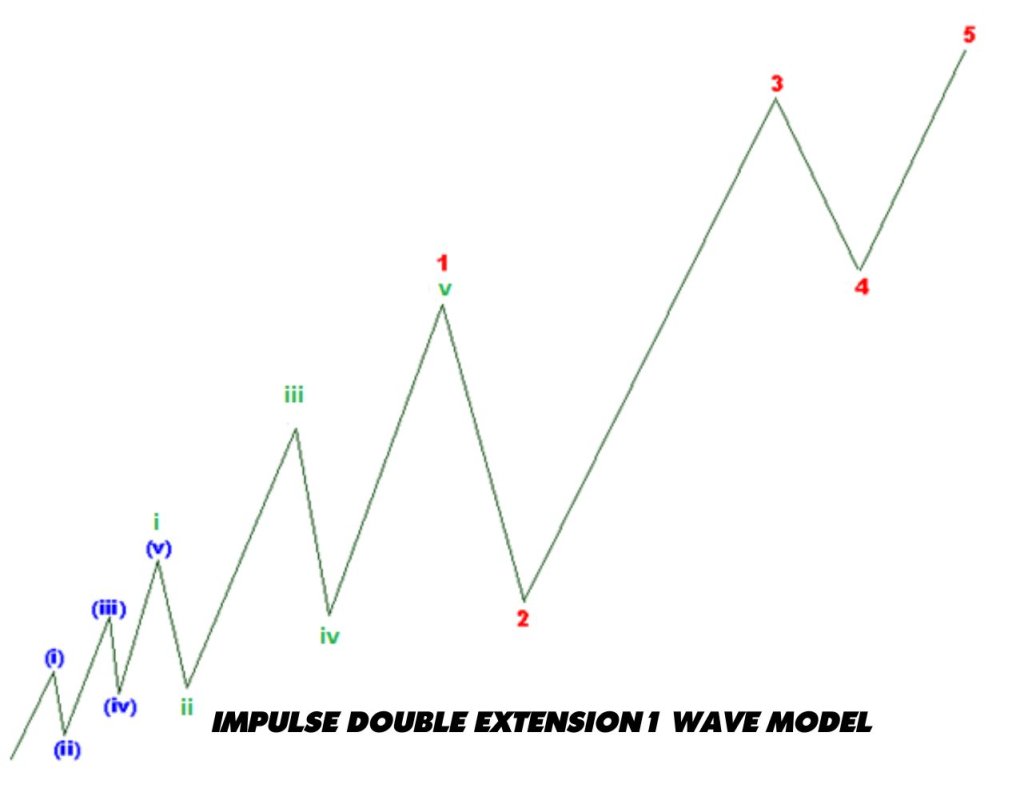
- In some cases, there can be a Double Extension with wave 1, resulting in 13 waves (very rarely, a Triple Extension with wave 1 can lead to 17 waves).
2. Wave 3 Extension Model
Principles:
- A nested wave 3 extension comprises 9 waves, each with a similar shape and developmental time frame.
- If an extension occurs in wave 3, waves 1 and 5 will be regular waves without extensions.
- Wave 4 should not overlap the price range of wave 1.
- Wave 3 is never the shortest wave.
- Wave 3 extension follows the Impulse (IM) pattern.
- In some cases, there can be a Double Extension with wave 3, resulting in 13 waves (very rarely, a Triple Extension with wave 3 can lead to 17 waves).
3. Wave 5 Extension Model
Principles:
- A nested wave 5 extension comprises 9 waves, each with a similar shape and developmental time frame.
- If an extension occurs in wave 5, waves 1 and 3 will be regular waves without extensions.
- Wave 4 should not overlap the price range of wave 1.
- Wave 5 extension follows the Impulse (IM) or Ending Diagonal (ED) pattern.
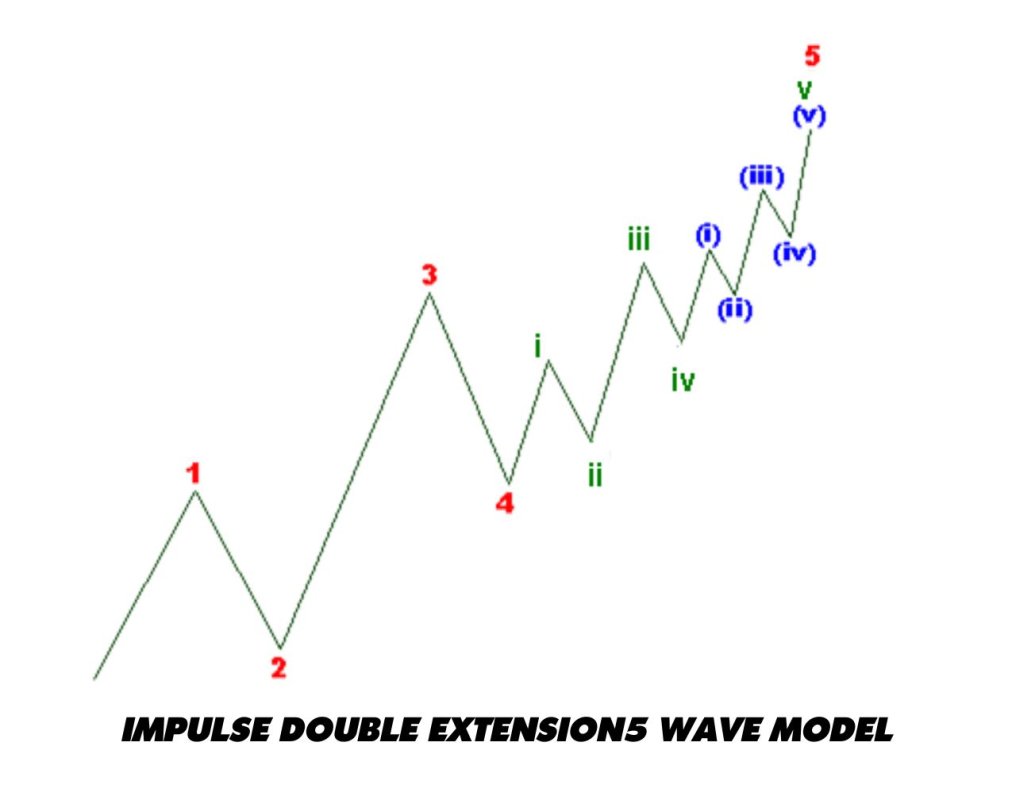
- In some cases, there can be a Double Extension with wave 5, resulting in 13 waves (very rarely, a Triple Extension with wave 5 can lead to 17 waves).
3.2 Impulse Truncated 5th Model
The pattern where wave 5 cannot exceed the end point of wave 3 is called an Impulse Truncated 5th or truncated wave. Wave 5 only reaches near the peak of wave 3. This pattern indicates a weak trend, and the market will quickly shift direction to the opposite trend.
1. Principles:
- The Truncated 5th pattern, also known as a truncation, consists of 5 waves.
- Wave 2 does not extend beyond the price level of Wave 1, preventing it from surpassing the starting point of Wave 1.
- Wave 3 is never the shortest wave compared to Waves 1 and 5.
- Wave 4 does not enter the price range of Wave 1, except in cases of Diagonal Triangles, and sometimes it appears in Wave 1 or A, but never in Wave 3. This means that Diagonal Triangle patterns can also take the form of a Failure or Truncated 5th when Wave 5 does not surpass Wave 3.
- Wave 5 does not exceed the end point of Wave 3.
- Wave 3 exhibits the largest price momentum.
- The internal structure follows various corrective patterns.
2. Position:
The Truncated 5th pattern, or truncation, only appears in Waves 5 or C and usually does not occur in the fifth wave of Wave 3 at a higher-degree wave level.
3. Structure
The Truncated 5th wave pattern consists of 5 waves with an inner wave structure in the form of 5-3-5-3-5.
| You have just read the article: Impulse Wave Next, I will share with you about: Diagonal Wave For reviewing the last part: Market Psychology Following The Elliott Wave |


